 Romford Dogs
  Available in US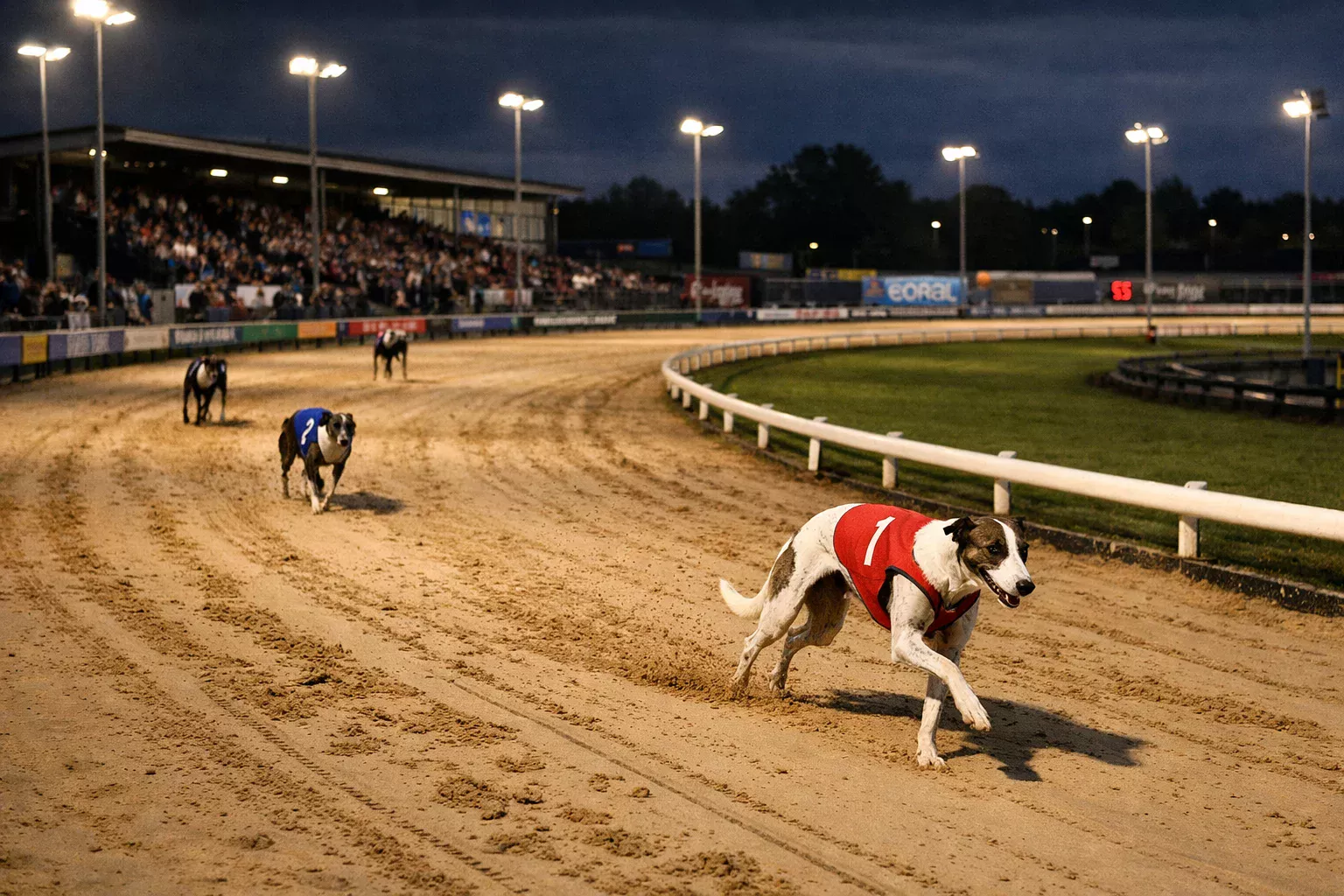
The ultimate test. At 925 metres, Romford’s longest distance pushes greyhounds to their stamina limits. This is marathon racing by greyhound standards, covering nearly three complete laps of the track and demanding sustained effort that exposes any weakness in conditioning. Dogs that thrive at 925m possess qualities that shorter distances never test: deep reserves, efficient running economy, and the mental fortitude to keep competing when muscles burn.
Romford’s 350-metre circumference means the 925m trip involves approximately 2.6 laps, with runners negotiating five or six bends depending on the start position. The distance sits at the extreme end of what UK tracks offer, making specialists at this trip relatively rare. According to the GBGB Progress Report, 5,133 greyhounds were registered in 2024, but only a fraction possess the stamina profile for genuine marathon racing. Finding genuine marathon dogs among entries requires specific form analysis that differs substantially from sprint or standard distance selection.
Understanding what the extreme distance demands, how to identify true stayers, and which form indicators separate marathon specialists from dogs merely entered at the wrong trip helps navigate races where the betting public often struggles to assess relative abilities. The long way round rewards those who know what to look for.
925m Characteristics
The 925m distance at Romford starts on the back straight, positioning dogs for an extended journey that tests every aspect of racing ability. Unlike sprint distances where trap speed dominates, the marathon trip allows dogs time to settle, find positions, and execute tactics that shorter races render impossible. The race unfolds in phases rather than as a single sustained sprint.
Five or six bends, depending on exact start placement, multiply the importance of cornering efficiency. Each wide-running bend costs ground that accumulates over the extended trip. A dog losing half a length per bend through inefficient cornering sacrifices three lengths before the race even reaches its critical stages. Rail runners enjoy compounding advantages that grow more significant as the distance extends.
Energy Management
Marathon greyhounds cannot run at maximum effort from start to finish. The distance exceeds what pure anaerobic capacity can sustain, forcing reliance on aerobic energy systems. Dogs that sprint too hard early fade dramatically in the closing stages. Those that conserve energy intelligently maintain pace while rivals falter. This energy management distinguishes genuine stayers from dogs with speed but insufficient stamina.
The pacing visible in 925m races differs noticeably from shorter trips. Early fractions often appear modest by sprint standards as experienced marathon dogs find sustainable rhythms. The race accelerates in later stages as dogs begin their finishing efforts, with the final bend and home straight seeing the most dramatic position changes.
Physical Demands
Body composition matters particularly at extreme distances. Heavy musculature that powers sprint acceleration becomes inefficient weight over 925m. Leaner builds with efficient stride patterns suit the marathon trip better, trading explosive power for running economy. Observing dogs in the parade ring can reveal physiques suggesting distance suitability beyond what form figures alone indicate.
Recovery between races takes longer after marathon efforts. Trainers typically space 925m outings more widely than sprint races, recognising that the physical demands require extended recuperation. Dogs appearing at marathon distances frequently may show cumulative fatigue that degrades performance even when recent form looks acceptable.
Identifying Stayers
Breeding provides the first indication of marathon potential. Certain bloodlines produce disproportionate numbers of successful stayers, and pedigree analysis reveals whether a dog comes from stamina-oriented stock. Sires known for producing marathon winners pass that tendency to offspring with sufficient reliability that breeding merits serious consideration in 925m selections.
Previous form at the distance offers the clearest evidence. Dogs with winning or placed form at 925m have demonstrated the basic capability. First-time marathon runners present greater uncertainty regardless of their success at shorter trips. The step up from 750m to 925m, though only 175 metres, represents a significant additional test that not all middle-distance dogs can meet.
Form Patterns
Strong finishing at 750m suggests potential for the marathon extension. Dogs that close relentlessly through the final stages of two-lap races may find 925m suits them even better, providing additional distance to deploy their finishing ability. Conversely, dogs that lead at 750m but tire in the closing stages may struggle to sustain that effort over the longer trip.
Sectional time analysis reveals true stamina. A dog maintaining consistent sectional times throughout a 750m race shows the running efficiency that marathon distances reward. Declining sectionals, where later sections take progressively longer, indicate stamina limitations that 925m will expose more severely than 750m did.
Running Style
Hold-up tactics suit marathon racing particularly well. Dogs that settle in mid-division, conserve energy through the early and middle stages, then produce sustained finishing runs often thrive at extreme distances. Their running style aligns with the race dynamics that the extended trip creates.
Front-runners face particular challenges at 925m. Maintaining the lead for nearly three laps while competitors stalk and wait requires exceptional stamina. Some dogs manage this, grinding rivals into submission through relentless pace. More often, early leaders fade as the race extends, picked off by closers with energy reserves remaining when it matters most.
Betting Considerations
Marathon races often feature smaller fields than standard distances, reflecting the limited pool of genuine stayers. Romford’s six meetings per week provide regular opportunities for marathon specialists to compete, with the track now serving as London’s only greyhound venue following Crayford’s January 2025 closure. Though 925m races appear less frequently than standard distance events, the concentration of metropolitan racing at Romford has increased the significance of its marathon programme. Smaller fields simplify some aspects of selection but reduce each-way value and can produce less competitive racing where class differences become more apparent without traffic to create interference.
Market assessments of marathon runners sometimes lack the accuracy seen at popular distances. Fewer races mean less form to analyse, and the betting public has less experience evaluating 925m specialists. This can create value opportunities for those who understand marathon racing dynamics, though it equally creates traps for those who apply sprint-distance logic inappropriately.
Trap Analysis
Trap biases at 925m differ from sprint distances. The extended trip provides time to overcome poor early positions, reducing the immediate impact of trap draws. Inside draws still offer distance savings over multiple bends, but the significance diminishes relative to pure staying ability. A genuine stayer drawn wide holds better prospects at 925m than at 225m.
Field composition matters more than trap numbers in isolation. Assessing which dogs will contest the early lead, which will settle, and which will close helps predict race shape regardless of trap positions. Marathon racing rewards tactical reading that trap statistics alone cannot provide.
Conditions Impact
Going conditions affect marathon times substantially. Heavy conditions slow all runners but particularly disadvantage dogs whose stamina margins are tight. A dog that barely stays 925m on fast going may fail to complete the distance effectively when conditions demand additional effort. Checking going reports before marathon race assessment helps calibrate expectations appropriately.
Weather conditions during the race also matter. Wind resistance accumulates over extended distances, and dogs racing into headwinds through the home straight face energy demands that following winds eliminate. Track orientation relative to wind direction can influence which running styles benefit on any given evening.
Value Opportunities
Marathon races occasionally produce longer-priced winners than equivalent quality races at standard distances. The relative scarcity of 925m form means market assessments rely on extrapolation from shorter distances, and that extrapolation sometimes errs. Dogs stepping up from 750m with strong closing form may go overlooked when their win records at shorter trips appear modest.
Conversely, short-priced favourites at marathon distances sometimes disappoint when stamina assumptions prove unfounded. A dog dominant at 750m may encounter entirely different dynamics at 925m, and backing such dogs at cramped prices risks poor value when the additional distance tests unproven capabilities.
Important Notice
This article provides educational information about Romford 925m races for form analysis purposes. Marathon distance racing involves specific variables that form patterns describe but cannot guarantee. All betting carries financial risk; never wager more than you can afford to lose. Responsible gambling tools are available through licensed operators. If gambling becomes problematic, support is available from GambleAware and the National Gambling Helpline. You must be 18 or over to bet in the UK.
Romford 925m Races — More on this topic at results romford dogs.
See also Wales Greyhound Racing Ban.
