 Romford Dogs
  Available in US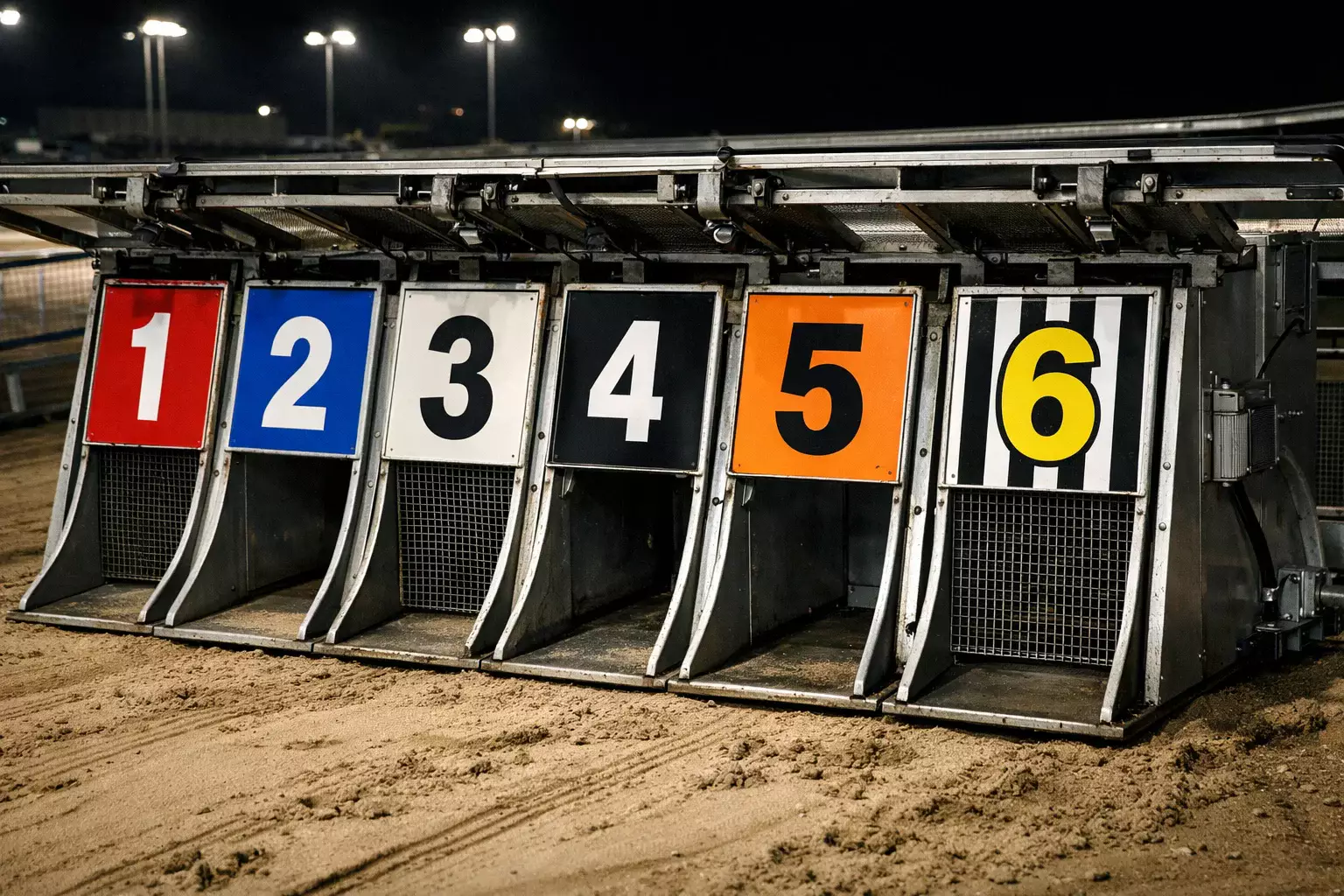
Romford trap statistics reveal measurable patterns that informed bettors can exploit. Unlike subjective assessments of form or trainer whispers, trap bias represents quantifiable data showing which starting positions historically produce winners at rates exceeding mathematical expectation. The numbers don’t lie, even when they contradict intuition.
Every greyhound track develops distinct trap biases based on physical characteristics. Circuit geometry, bend tightness, run-up distances, and rail positioning all influence which traps advantage or disadvantage runners. At Romford Stadium, London’s sole surviving greyhound venue following Crayford’s January 2025 closure, these factors create specific patterns across the five racing distances offered on its 350-metre circumference.
Understanding Romford’s trap data requires examining statistics across sufficient sample sizes to distinguish genuine patterns from random variation. A trap winning three consecutive races might reflect nothing more than coincidence. That same trap showing elevated win rates across several hundred races demonstrates something structural worth incorporating into selection processes.
This analysis presents current trap statistics for Romford’s 2024-25 racing season, breaking down bias by distance, examining seasonal variations, and exploring how weather conditions modify expected patterns. For punters serious about data-driven approaches, trap statistics form essential inputs alongside form reading and trainer analysis. The track’s geometry creates edges available to anyone willing to study what the numbers actually show.
What Is Trap Bias?
Trap bias describes the statistical phenomenon where certain starting positions win races more or less frequently than random chance predicts. With six traps in standard greyhound races, equal probability would produce approximately 16.67 percent win rate for each position. Deviations from this baseline, when sustained across meaningful sample sizes, indicate genuine bias rather than noise.
Causes of Trap Bias
Track geometry creates most bias patterns. Romford’s 350-metre circumference features relatively tight bends compared to larger circuits. This tightness affects inside and outside runners differently. Dogs breaking from trap one enjoy immediate rail access, while trap six runners face longer paths around bends unless they secure early crossing positions.
Run-up distances matter considerably. The stretch between trap opening and the first bend determines how much time dogs have to establish positions. Shorter run-ups intensify early crowding, often benefiting inside draws. Longer approaches allow wider-drawn greyhounds to angle across without severe interference, reducing inside trap advantages.
Racing line dynamics compound geometric effects. Once dogs establish rail positions, maintaining them requires less ground coverage than constantly running wide. Leaders hugging the rail force chasers to cover extra distance on every bend. This cumulative advantage explains why early-paced dogs from inside traps often dominate certain distance configurations.
Measuring Bias Accurately
Genuine bias analysis requires substantial sample sizes, typically several hundred races minimum per distance category. Small samples produce misleading patterns, as short-term fluctuations mask long-term tendencies. Professional analysts examine data spanning entire seasons rather than isolated weeks.
Mark Bird, Chief Executive of the Greyhound Board of Great Britain, commented on the sport’s data transparency: “There is much to be pleased and encouraged by in this year’s data. It shows that the initiatives we have introduced in recent years are now embedded and are helping to consolidate the significant progress we have made.” This principle of data-driven improvement applies equally to trap statistics, where methodical examination reveals useful patterns obscured by casual observation.
Why Bias Varies by Distance
Different distances involve different start positions relative to track features. Romford’s 225m sprint begins on a bend, creating immediate positional battles where inside traps gain structural advantages. The 400m distance starts runners facing a longer straight section, somewhat equalising early opportunities. Stayer trips covering 575m or beyond encounter multiple bend sequences where cumulative rail advantages compound.
These variations mean blanket assumptions about trap quality fail. A trap performing excellently over sprint distances might prove mediocre or worse at staying trips. Serious trap analysis disaggregates data by distance rather than pooling everything into meaningless averages. The numbers don’t lie, but only when examined with appropriate granularity.
Romford Trap Data Overview
Aggregate trap statistics for Romford’s current racing season reveal patterns consistent with the track’s physical characteristics. These figures encompass all distances and race grades, providing baseline understanding before distance-specific analysis.
Overall Win Rates by Trap
Across all Romford races during the 2024-25 season, inside traps demonstrate measurable advantages. Trap one produces winners at rates approaching nineteen percent, comfortably exceeding the theoretical 16.67 percent baseline. Trap two performs similarly well, typically sitting between seventeen and eighteen percent.
Middle traps show more variable performance. Traps three and four cluster around the expected average, neither dramatically outperforming nor underperforming across aggregate data. These positions sometimes benefit from racing room when inside dogs crowd each other, though this advantage appears inconsistently.
Outside traps face structural challenges at Romford. Trap six particularly struggles, often recording win rates between thirteen and fifteen percent, significantly below random expectation. Trap five performs marginally better but rarely threatens the inside positions’ dominance when examined across sufficient sample sizes.
Place Rates and Average Positions
Win rates tell only part of the story. Place statistics, measuring top-three finishes, reveal additional patterns. Inside traps maintain elevated place rates consistent with their win advantages. A trap might not always win but consistently finishes competitively, suggesting reliability for each-way considerations.
Average finishing position provides another useful metric. Trap one averaging around 2.8 across all races demonstrates consistent front-rank performance. Trap six averaging 3.5 or higher indicates regular mid-pack or worse finishes. These averages, while seemingly modest differences, translate into significant edge calculations across betting volumes.
Statistical Confidence Levels
The strength of conclusions depends on sample sizes underlying the data. With Romford hosting six meetings weekly, substantial data accumulates relatively quickly. Several thousand races per season provide robust foundations for statistical confidence. Patterns holding across multiple seasons deserve particular respect, having survived varied competitive conditions.
Data from sources like Greyhound Data enables independent verification of trap statistics. Serious analysts cross-reference multiple data sources rather than relying on single publications that might contain errors or use inconsistent methodologies.
Historical Consistency
Romford’s trap bias patterns remain relatively stable across years, as the physical track characteristics driving them don’t change. Resurfacing work sometimes temporarily alters running conditions, but fundamental geometry persists. Bettors can reasonably expect current patterns to extend forward until major track modifications occur.
This stability contrasts with form-based factors that fluctuate constantly. While individual dog performance changes race to race, trap advantages remain embedded in track design. Combining stable trap data with dynamic form analysis creates analytical frameworks more robust than either approach alone.
Data Limitations
Aggregate statistics necessarily obscure important variations. Overall trap win rates pool data from sprint specialists and stayers, open-class runners and A10 maidens, dry conditions and rain-affected meetings. These averages provide starting points but require disaggregation for practical application. The following sections examine how bias shifts across distances and conditions, refining these overview figures into actionable intelligence.
Distance-by-Distance Breakdown
Romford offers five racing distances, each producing distinct trap bias patterns. Understanding these variations transforms generic trap awareness into precision analysis tailored to specific race conditions.
225 Metres: Sprint Distance
The shortest Romford distance features a bend start, launching runners immediately into positional battles. This configuration amplifies inside trap advantages dramatically. Trap one win rates at 225m often exceed twenty-two percent, representing massive deviation from baseline expectation.
Outside traps face severe difficulties in sprint races. Trap six at 225m frequently records win rates below twelve percent, nearly five percentage points worse than random chance would predict. The brief race duration provides insufficient time for wider-drawn dogs to overcome poor early positions. Speed to the first bend determines sprint outcomes more than any other factor, and inside draws structurally favour quick breaking.
Middle traps at sprint distance perform inconsistently. Traps three and four sometimes benefit when inside dogs interfere with each other, but equally often find themselves squeezed without racing room. Sprint handicapping requires particular attention to early-pace profiles alongside trap positions.
400 Metres: Standard Distance
Romford’s standard 400m trip starts with a longer initial straight section, partially equalising opportunities across the draw. Inside traps retain advantages but less pronounced than sprint distances. Trap one win rates settle around eighteen to nineteen percent, meaningful but not overwhelming.
At Romford Stadium, which hosts six meetings weekly throughout the year, 400m races constitute the majority of programming. This volume generates the most robust statistical samples, making 400m trap data particularly reliable for analysis.
Outside traps perform better at 400m than sprint distances, though still below expected levels. The longer trip allows strong runners from wide draws to work into competitive positions by the second bend. Dogs with strong finishing kicks can overcome early positional disadvantages given sufficient race distance.
575 Metres: Middle Distance
Middle-distance races at 575m involve two complete circuit loops plus additional ground. Cumulative rail advantages compound across multiple bend sequences, reinstating inside trap dominance similar to sprint patterns. The extra distance, counterintuitively, often hurts outside draws rather than helping them.
Trap one statistics at 575m typically show elevated win rates approaching sprint levels. The sustained racing allows positionally advantaged dogs to consolidate leads rather than merely surviving brief exchanges. Closers from outside draws face extra ground coverage on every bend, compounding through the race.
Middle-distance racing rewards tactical patience combined with trap awareness. Dogs able to settle behind early pace before challenging can succeed from wider positions, but such running styles prove relatively uncommon among greyhounds bred for instinctive early speed.
750 Metres: Staying Distance
True stamina tests at 750m introduce fatigue factors that sometimes override trap bias. The additional race duration means tiring early leaders become catchable regardless of positional advantages accumulated through opening phases. Trap statistics show more compressed ranges at staying distances.
Inside traps retain advantages but reduced magnitude. Trap one win rates settle around seventeen to eighteen percent, still above baseline but closer to expectation than shorter trips produce. The flattening reflects genuine staying ability mattering more as distances extend.
Trap six actually performs somewhat better at staying trips than standard distances. Strong stayers from wide draws have time to gradually improve positions through pure stamina rather than requiring exceptional early speed. Patient racing from outside still faces challenges but less insurmountable ones.
925 Metres: Marathon Distance
Romford’s longest distance covers nearly three complete laps. Marathon trips represent specialist territory where trap position matters less than fundamental staying ability. Statistics show relatively flat distributions across traps, with none dramatically outperforming or underperforming.
The extended race duration means multiple lead changes often occur as early pace dogs tire and stayers gradually work through the field. Trap bias analysis at marathon distance provides less predictive value than at shorter trips, though inside positions retain marginal edges through reduced ground coverage requirements.
Weather and Seasonal Patterns
Track conditions significantly influence trap bias patterns, with weather effects sometimes amplifying or moderating expected tendencies. Understanding how environmental factors interact with trap positions adds valuable nuance to statistical analysis.
Rain and Surface Conditions
Wet tracks generally reduce grip levels, affecting how dogs navigate bends. Reduced traction makes tight rail running more difficult, sometimes benefiting wider-drawn dogs who find cleaner racing lines away from churned-up inside sections. Heavy rain can partially neutralise inside trap advantages that depend on clean rail running.
Conversely, light rain on previously dry surfaces sometimes creates slicker conditions favouring early leaders who avoid kickback from runners ahead. The specific effect depends on rainfall intensity, pre-existing track conditions, and drainage effectiveness. Romford’s well-maintained surface handles moderate rain reasonably well, but prolonged wet weather accumulates effects across meeting cards.
GBGB monitors track conditions carefully, with injury data showing overall track injury rates of 1.07 percent across licensed venues according to their published statistics. Surface maintenance contributes to keeping these rates manageable even during challenging weather periods.
Temperature Effects
Cold conditions often produce faster running as dogs work harder to generate warmth. Summer heat can slow proceedings, particularly affecting heavily-muscled sprint types who overheat more easily than leaner stayers. Temperature influences absolute times more than relative trap performance, though extreme conditions sometimes favour particular running styles.
Winter meetings at Romford occasionally encounter frost delays or cancellations when surface safety becomes questionable. Dawn checks determine whether conditions permit racing, with afternoon and evening cards occasionally relocated to alternative dates when morning assessments prove unfavourable.
Wind Considerations
Strong winds affect racing more than casual observers might expect. Headwinds slow overall times and can tire leaders early, potentially benefiting closers who draught behind through opening phases. Tailwinds assist quick dogs but rarely change fundamental competitive dynamics.
Crosswinds create interesting trap dynamics. Dogs on the windward side may struggle to maintain racing lines, while leeward runners face less interference. The effect varies by wind direction relative to track orientation, creating meeting-specific considerations that attentive punters note during afternoon warm-ups.
Seasonal Patterns
Summer and winter racing produce subtly different trap dynamics beyond pure weather effects. Summer months bring firmer surfaces favouring certain running styles. Winter conditions demand different attributes, sometimes shuffling which dogs handle conditions best.
Trainer approaches also shift seasonally. Some kennels excel at winter preparation, maintaining condition through darker months when others struggle. Trap statistics during winter might reflect changed competitive balances as much as track condition effects. Serious analysts note seasonal patterns within trainer form alongside environmental factors.
Bend Starts versus Straight Starts
Romford’s different distances begin from various track positions, fundamentally altering early-race dynamics. The distinction between bend starts and straight starts explains much of the distance-specific trap bias variation observed in the statistics.
Bend Start Distances
The 225m sprint and 575m middle-distance races begin on bends, immediately creating positional competition. Inside-drawn dogs enjoy shorter paths to the first racing line, while outside traps must cover extra ground merely to reach equivalent positions. This structural disadvantage compounds before any competitive factors even apply.
Bend starts intensify crowding as dogs converge toward the rail. The narrow racing corridor from bend positions means early contact occurs frequently, sometimes benefiting unexpected survivors while disadvantaging those caught in trouble. Trap analysis for bend-start distances must account for these interference patterns alongside pure positional advantages.
Dogs with strong early pace benefit particularly from inside draws at bend starts. Quick breakers from trap one or two can establish rail positions before wider dogs even complete their angles inward. This early positional establishment often proves decisive, making trap statistics at bend-start distances heavily skewed toward inside positions.
Straight Start Distances
The 400m standard trip, 750m staying distance, and 925m marathon all begin from straight sections. This configuration provides more equitable early opportunities, as all traps face similar ground coverage to reach the first bend. The longer initial straights allow natural speed sorting before bend dynamics engage.
Straight starts produce more competitive racing from outside traps. Dogs drawn six or five have time to demonstrate speed before positional battles begin, sometimes securing advantageous spots through raw pace rather than draw luck. The statistical compression at straight-start distances reflects this improved outside-draw viability.
Strategic Implications
Punters should adjust trap expectations based on start configuration. A dog showing poor form from outside draws at bend-start distances might improve significantly when competing at straight-start trips where draw disadvantages reduce. The reverse also applies, as inside-drawn specialists might struggle when their structural edge diminishes.
Trainer decisions regarding distance placement sometimes reflect start-type considerations as much as pure stamina assessment. A dog with moderate early pace but strong finishing might be entered at 400m rather than 225m specifically to avoid bend-start disadvantages from outside draws. Reading between the lines of distance entries reveals tactical thinking beyond surface analysis.
Betting Implications
Trap statistics translate into practical betting applications when integrated with broader analytical frameworks. Used in isolation, trap data provides incomplete pictures. Combined with form analysis, trainer assessment, and market awareness, trap statistics become powerful selection tools.
Identifying Value Through Trap Advantage
Value emerges when market prices underestimate trap advantages. A dog drawn trap one at 225m might deserve shorter odds than those offered if markets focus excessively on recent form while neglecting positional factors. Systematic bettors compare expected win rates from trap data against implied probabilities from market prices.
The calculation works straightforwardly. If trap one at 225m wins approximately twenty-two percent of races, fair odds sit around 7/2 before any other factors. A dog offered 5/1 from trap one already faces positive expectation from trap position alone, assuming competitive ability exists. Adding form analysis to trap assessment creates layered value identification.
Conversely, trap disadvantages sometimes mean avoiding apparently attractive prices. A dog at 2/1 from trap six faces structural headwinds requiring exceptional ability to overcome. The price might appear short value when trap handicaps are properly incorporated into assessment.
Combining Trap Data with Form
The most effective approach integrates trap statistics with form analysis rather than prioritising either exclusively. A dog showing improving form from favourable draws deserves particular attention. Deteriorating form from disadvantageous positions might partially reflect trap problems rather than genuine decline.
Reading previous trap assignments within form sequences reveals patterns worth noting. A dog winning from trap six demonstrated ability to overcome positional handicaps, suggesting quality perhaps reflected in future performances from better draws. Similarly, defeats from inside traps indicate potential issues beyond draw luck.
Situations Where Trap Data Matters Most
Competitive races where form separates runners minimally benefit most from trap analysis. When multiple dogs appear capable of winning based on recent performances, trap positions often determine actual outcomes. These situations represent premium opportunities for trap-aware punters facing markets that underweight positional factors.
Open races particularly suit trap-based approaches. Without grade restrictions, varied ability levels compete, but trap advantages apply regardless of absolute quality. Strong open-class dogs from outside draws still face structural challenges that enhance inside-drawn opponents’ chances.
When to De-Emphasise Trap Data
Exceptional ability sometimes overrides trap disadvantages. A genuinely superior dog drawn trap six might win despite positional handicaps through sheer speed exceeding rivals by multiple lengths. Trap analysis works best among evenly-matched fields rather than races featuring standout individuals.
Marathon distances reduce trap relevance as stamina factors dominate extended races. Trap-focused approaches suit sprint and standard distances better than staying trips where fundamental endurance matters more than starting position. Adjusting emphasis across distances reflects how strongly trap bias actually influences different race types.
The numbers don’t lie, but they require contextual application. Trap statistics represent one input among several, not guaranteed predictors. Integrating trap awareness with comprehensive analysis produces better decisions than mechanically following raw data without judgment.
Important Information
This analysis provides statistical information about trap bias patterns at Romford Stadium for educational purposes only. Nothing contained here constitutes betting advice or recommendations to wager on any specific race or outcome. Past statistical patterns never guarantee future results, and trap bias represents one analytical factor among many influencing race outcomes.
Betting involves inherent financial risk. If you choose to bet, do so responsibly and within your means. Establish strict limits before wagering and never attempt to recover losses through increased stakes. Support is available through BeGambleAware for anyone experiencing gambling-related concerns. Legal betting age in the United Kingdom is eighteen.
Statistics referenced derive from publicly available sources and independent tracking services. This publication maintains no official connection to Romford Stadium, the Greyhound Board of Great Britain, or any licensed betting operator. Track conditions and trap statistics evolve across seasons, requiring ongoing monitoring rather than reliance on historical data alone.
Romford Trap Statistics 2025–26 — More on this topic at results romford dogs.
See also Greyhound Betting Types Explained.
