 Romford Dogs
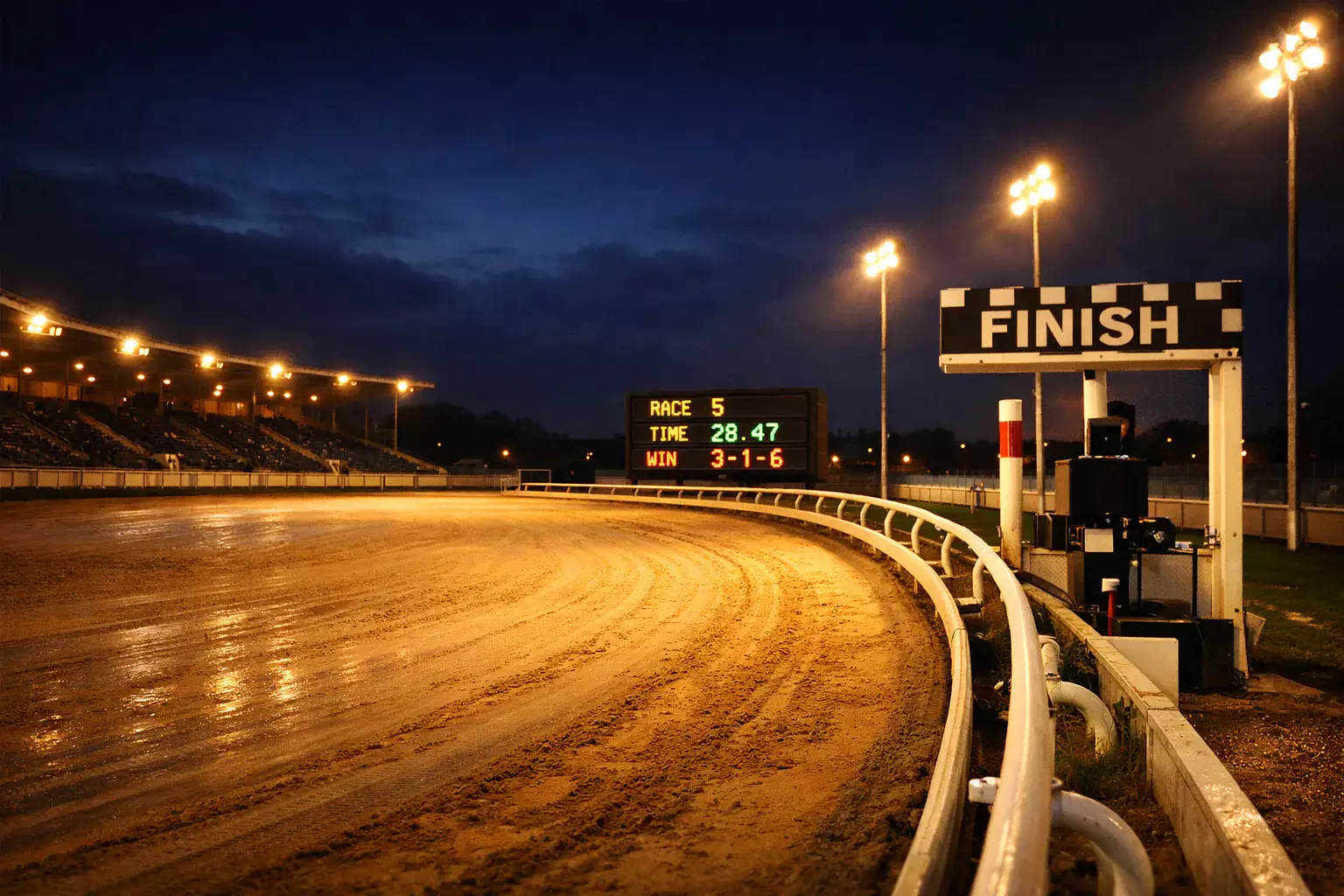
Romford dogs results matter more than ever in 2026. Since the closure of Crayford Stadium in January 2025, Romford Greyhound Stadium stands as London's only licensed greyhound track, hosting six racing meetings each week and serving as the capital's sole venue for live dog racing. Whether you follow the evening cards on Friday and Saturday, catch the morning meetings midweek, or prefer the afternoon BAGS sessions, understanding Romford's unique track characteristics gives you a genuine edge.
This comprehensive guide delivers everything you need to interpret Romford greyhound results, from reading racecards and decoding form figures to understanding trap statistics across all five racing distances. The 350-metre circuit offers sprint battles over 225 metres, standard-distance contests at 400 metres, middle-distance challenges at 575 metres, and stamina tests over 750 and 925 metres. Each distance presents distinct tactical considerations that shape betting decisions.
Beyond the numbers, this resource covers the welfare standards governing British greyhound racing. The Greyhound Board of Great Britain maintains oversight of licensed tracks including Romford, with track injury rates at their lowest recorded level (1.07% in 2024) and retirement programmes successfully rehoming 94% of racing dogs. Informed punters consider both form and the integrity of the sport when making selections.
The sections that follow break down track specifications, historical records, race scheduling, trap bias patterns, racecard interpretation, form analysis, bet types, and the regulatory framework protecting greyhound welfare at Britain's busiest metropolitan track.
What You Need to Know About Romford Dogs
- Romford is Greater London's only licensed greyhound track following Crayford's January 2025 closure, operating six meetings weekly across evening, morning, and afternoon sessions.
- The 350-metre circuit hosts races from 225m sprints to 925m marathons, with trap bias patterns varying significantly by distance and start position.
- Track injury rates fell to a record low of 1.07% in 2024, while 94% of retired greyhounds successfully transition to homing centres.
- Understanding racecard form figures, sectional times, and grade systems transforms casual viewing into informed analysis.
- GBGB welfare initiatives have reduced economic euthanasia by 98% since 2018, with over £5.6 million funding rehoming programmes.
London's Last Greyhound Track
The phrase "London's only greyhound track" would have seemed absurd to anyone watching the sport during its golden era. In the 1940s, Britain boasted 77 licensed tracks and over 200 independent venues, with multiple stadiums competing for crowds across the capital. White City, Wimbledon, Walthamstow, Catford, Hackney—each drew tens of thousands on Saturday nights. That era has vanished. When Crayford Stadium closed its doors in January 2025, Romford inherited a singular distinction: the last licensed greyhound racing venue in Greater London.
The contraction tells a broader story. According to data compiled in the GREY2K USA Worldwide Report, only 18 GBGB-licensed tracks remained operational across the United Kingdom by early 2025, down from that post-war peak of 77 licensed venues. Globally, the picture appears similarly concentrated, with just 93 tracks operating across five countries worldwide. The economics proved challenging: prime urban land attracted property developers, attendance declined against competition from televised sport and online entertainment, and betting shifted increasingly online.
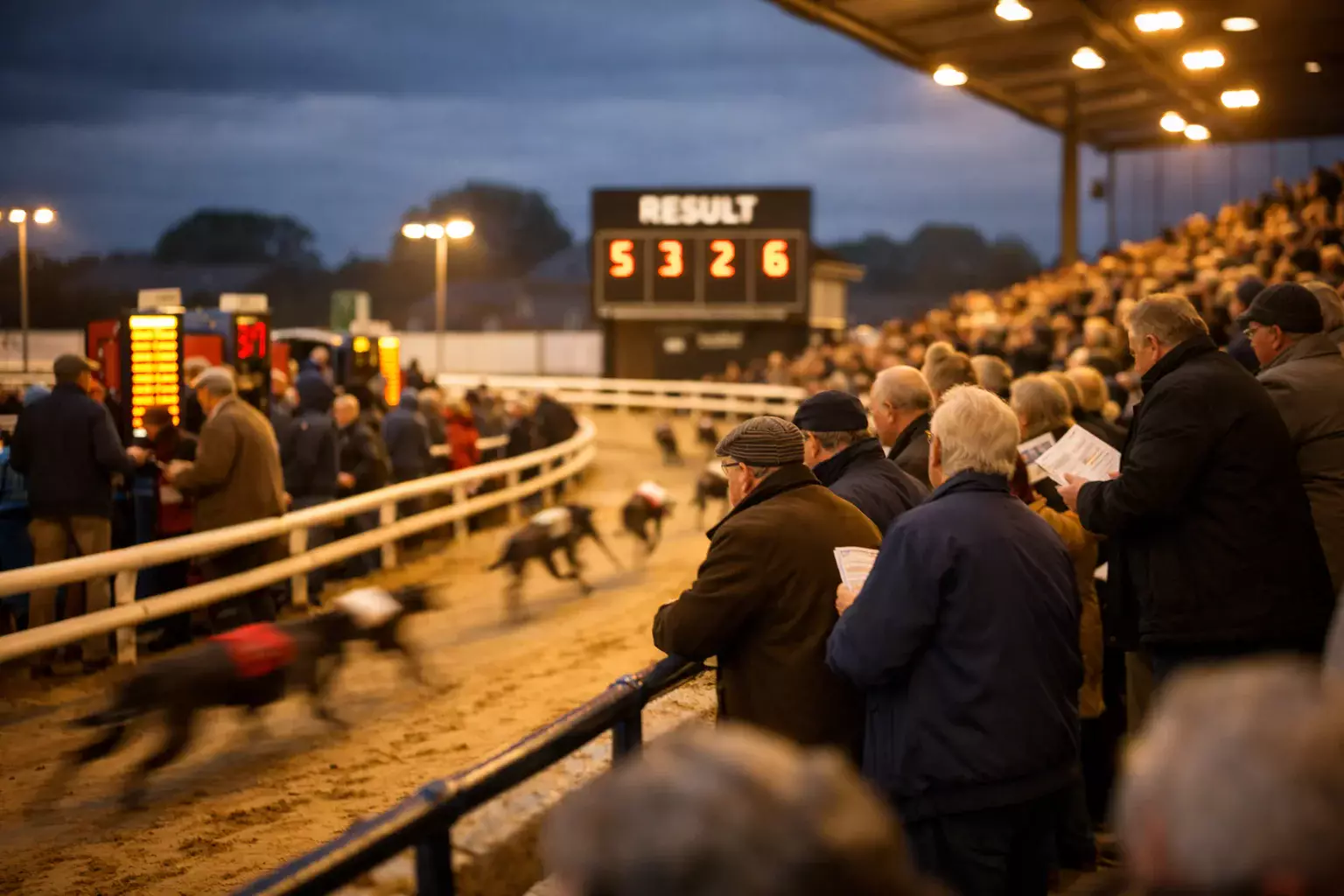
Romford survived where others fell. The stadium, originally opened in 1929, has operated continuously through economic cycles, ownership changes, and shifting social attitudes toward greyhound racing. Part of its resilience stems from location—accessible by public transport yet outside central London's most pressured real estate zones. Part stems from scheduling. The track runs six meetings per week, maximising utilisation and maintaining a steady presence in BAGS coverage that sustains bookmaker interest.
"UK greyhound racing is certainly better placed to enter a second centenary of sporting endeavours in the next couple of years, but we can never be complacent in terms of maintaining our sport's social licence within society," noted Mark Bird, Chief Executive of the Greyhound Board of Great Britain, in a 2025 statement. That balance—preserving tradition while adapting to contemporary welfare expectations—defines the challenge facing Romford and its remaining counterparts.
For punters, Romford's unique position concentrates London-area greyhound interest on a single venue. Historical form from Crayford or the long-closed Wimbledon no longer matters for track-specific calculations. Trap bias data, trainer statistics, and going reports all centre on this 350-metre circuit. The closure of alternative venues also channels specialist knowledge: trainers who previously split runners across multiple London tracks now funnel competitive greyhounds through Romford's kennels, potentially intensifying the quality of racing at the top grades.
The stadium continues hosting open races alongside BAGS meetings, maintaining a competitive calendar that stretches from puppy stakes through to graded events. As the spring 2026 season progresses, Romford remains the metropolitan standard-bearer for a sport once synonymous with London nightlife.
Track Specifications
Romford Greyhound Stadium operates on a 350-metre circumference track, placing it among the medium-sized circuits in the GBGB network. The layout accommodates five standard racing distances: 225 metres, 400 metres, 575 metres, 750 metres, and 925 metres. Each distance presents distinct starting positions, bend sequences, and tactical demands that shape how races unfold.
Sprint Distance: 225 Metres
The 225-metre sprint represents Romford's shortest test. Runners break from the bend, facing an immediate curve before a straight run to the finish. Early pace proves decisive—dogs trapped wide often struggle to recover ground before the line arrives. This distance favours pure speed over tactical nous, making trap draw particularly influential in race outcomes.
Standard Distance: 400 Metres
The 400-metre trip serves as Romford's workhorse distance, hosting the bulk of graded races and open events. Starting on a straight section, runners navigate two bends before the finishing stretch. This configuration allows early pace or late closing styles to compete, provided the dog possesses sufficient tactical speed to hold position through the bends. Most trap bias studies focus on this distance due to sample size.
Middle Distance: 575 Metres
At 575 metres, Romford tests both speed and stamina. The additional yardage typically includes an extra bend sequence, placing premium on a dog's ability to sustain pace rather than simply accelerate from the boxes. Middle-distance specialists often emerge from the ranks of standard-distance runners who demonstrate finishing strength but lack the electric early pace for sprint success.
Staying Distances: 750 and 925 Metres
The 750-metre and 925-metre trips attract genuine stayers—greyhounds bred and conditioned for extended efforts. These marathon distances circle the track multiple times, transforming early position into a negotiable factor. Pace distribution matters more than trap draw, as front-runners risk emptying the tank before the final straight. The 925-metre distance remains relatively rare in the schedule but appeals to punters seeking competitive contests where stamina, rather than box speed, determines the outcome.
Surface and Conditions
Romford maintains a sand-based racing surface subject to GBGB oversight and regular maintenance according to the GBGB Track Maintenance Manual. Going reports—ranging from fast through standard to slow—affect sectional times and influence which running styles gain advantage. Punters monitoring Romford results should note prevailing conditions, as dry, fast ground often amplifies trap bias while softer going may reduce the early-speed advantage.
Track Records
Track records at Romford reflect both greyhound quality and optimal racing conditions. These benchmark times establish the ceiling against which current runners can be measured, though direct comparisons require caution—record-setting performances typically occur under ideal going, with favourable trap draws and clear running lines.
Record Times by Distance
The 225-metre sprint record demands explosive box speed and uninterrupted passage to the line. Any crowding through the opening bend costs lengths that even elite pace cannot recover. At 400 metres, record times reward dogs combining early pace with sustained speed through the second bend and finishing straight. The best performers in this category often graduate to open-race competition.
Middle-distance marks over 575 metres favour versatile runners—quick enough to hold position but strong enough to accelerate through the final quarter. The 750-metre and 925-metre records belong to specialist stayers, typically dogs with breeding lines emphasising stamina over raw acceleration. These times see less frequent challenges due to smaller sample sizes at marathon distances.
Interpreting Records for Betting Purposes
Punters sometimes overweight track records when assessing current form. A dog's recent calculated time relative to the track record indicates class, but context matters. Was the record set on fast going now absent? Did the record-holder enjoy a clear run unavailable in crowded handicap fields? Current form and consistency often predict results better than occasional brilliance.
That said, runners posting times within a second of track records deserve respect at their respective distances. These performances signal genuine quality, and dogs repeatedly approaching record pace likely hold grading advantages over opponents whose best efforts fall further from the benchmark. Sectional analysis—discussed in later sections—adds nuance to raw finishing times when comparing potential contenders.
Race Schedule and Meetings
Romford Greyhound Stadium operates six racing meetings each week, establishing one of the busiest schedules among GBGB-licensed venues. This frequency ensures consistent racing action throughout the calendar, with sessions spanning evening, morning, and afternoon slots to accommodate both trackside attendance and remote betting audiences.
Evening Meetings: Friday and Saturday
The traditional evening meetings on Friday and Saturday represent Romford's flagship sessions. These cards draw the largest trackside crowds, with races typically commencing around 7:30 PM and continuing into late evening. Open races and feature events often slot into these prime-time cards, attracting competitive fields and enhanced prize money. For punters, the evening sessions offer visibility—live streaming coverage and expanded racecard commentary provide the fullest picture of contenders.
Morning Meetings: Wednesday and Saturday
Morning cards, running on Wednesday and Saturday, cater primarily to the betting shop audience. Races begin mid-morning and feed into bookmaker screens alongside horse racing fixtures. These meetings form part of the BAGS (Bookmakers' Afternoon Greyhound Service) coverage, with races timed to maintain betting flow through the morning and early afternoon periods. Field quality varies, but consistent grading means punters can apply standard form analysis.
Afternoon Sessions: Monday and Thursday
Monday and Thursday host afternoon meetings, again serving the BAGS framework. These daytime fixtures ensure Romford contributes to national greyhound coverage throughout the week, providing regular opportunities for punters specialising in the track. Trainers rotate their kennels across the weekly schedule, meaning different dogs appear on different days—tracking which days a trainer favours can reveal subtle patterns in kennel management.
BAGS Racing Explained
The Bookmakers' Afternoon Greyhound Service underpins much of Romford's commercial model. Licensed betting operators pay for streaming rights and race coverage, with fixtures scheduled to fill gaps in the broader sports calendar. BAGS meetings at Romford typically feature graded races rather than open events, maintaining competitive depth while ensuring sufficient runners to populate full cards. The system benefits punters through predictable race timing and comprehensive form histories.
Seasonal Considerations in Spring 2026
The spring racing programme brings longer daylight hours and typically faster going as tracks dry out after winter moisture. Open competitions scheduled for March through May often attract kennels preparing runners for summer feature events at other tracks. Punters following Romford through spring should note improving greyhounds stepping up in grade—the season traditionally surfaces emerging talent before the peak summer circuit.
Checking the weekly fixture list before placing bets confirms race timing and meeting type. Evening cards may carry different competitive profiles than morning BAGS sessions, influencing how form comparisons apply across the schedule.
Trap Statistics Overview
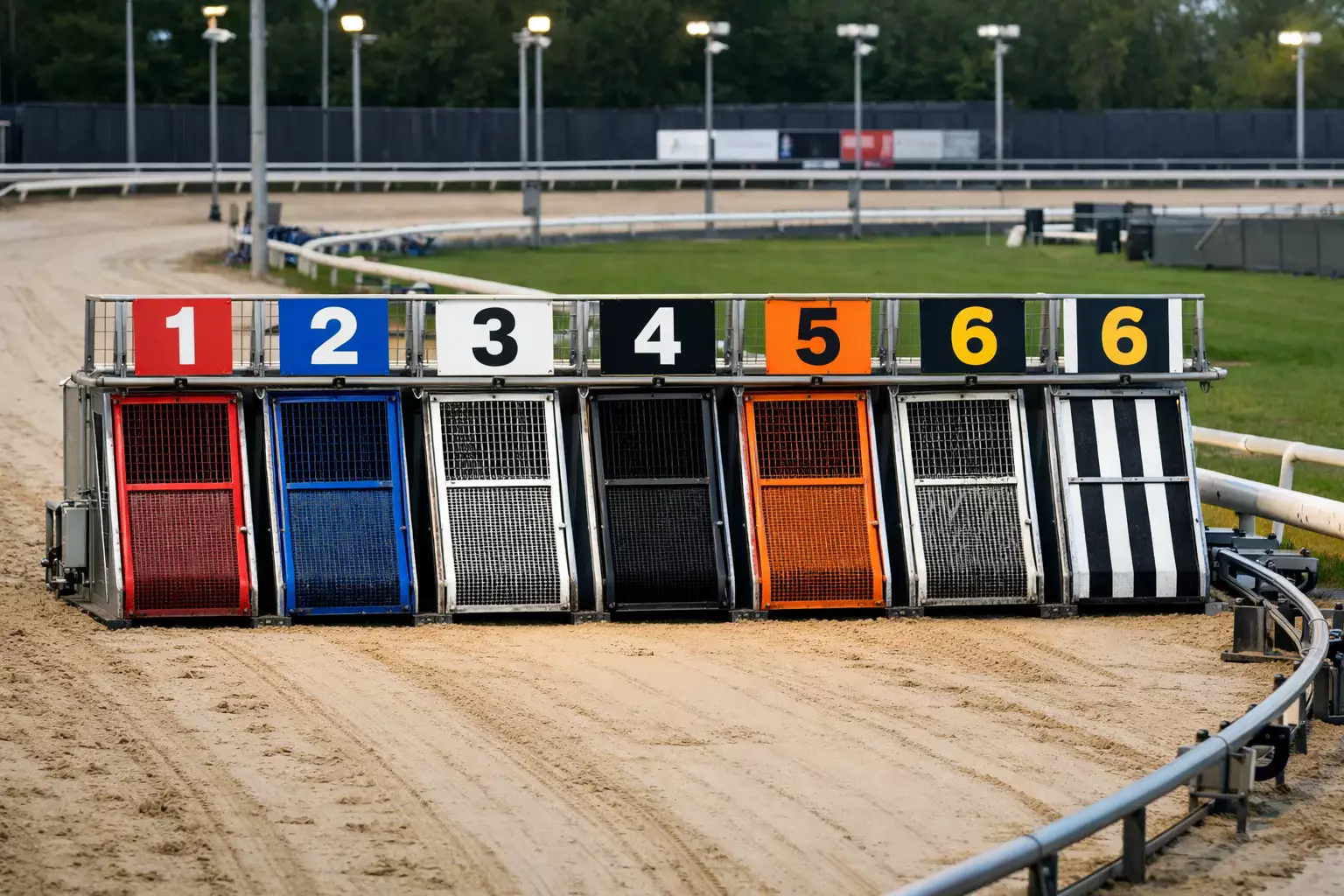
Every greyhound race at Romford begins from one of six traps, numbered one through six from inside rail to outside. In theory, each trap should win approximately 16.67% of races over a sufficiently large sample. In practice, track geometry, starting positions, and bend configurations create measurable deviations from this baseline—what punters call trap bias.
Understanding Trap Bias
Trap bias exists because greyhound tracks are not symmetrical experiences for every starting position. Inside traps (1 and 2) typically enjoy shorter distances to the rail, allowing quick-breaking dogs to establish position before the first bend. Outside traps (5 and 6) face longer routes to settle into racing room but may avoid inside crowding. The strength and direction of bias varies by track layout, distance, and whether the start occurs on a bend or straight section.
At Romford, the 350-metre circumference creates distinct bias patterns across the five racing distances. The 225-metre sprint, starting on a bend, tends to favour inside traps that can cut to the rail without interference. The 400-metre standard distance, beginning from a straight, distributes advantage more evenly but still shows measurable preference depending on field composition and going conditions.
Romford Trap Data Patterns
Aggregate data across recent Romford seasons reveals consistent tendencies. Trap 1 historically outperforms expected win rates at sprint distances, benefiting from immediate rail access on bend starts. Trap 6, conversely, often underperforms at 225 metres but may compensate at longer distances where sustained pace matters more than early position. Middle traps (3 and 4) tend toward baseline performance, neither dramatically advantaged nor disadvantaged by track geometry.
These patterns are not static. Track maintenance, rail positioning adjustments, and seasonal going changes can shift bias over weeks or months. Punters relying on historical trap statistics should verify that recent results confirm established patterns rather than assuming permanence.
Distance-Specific Bias Considerations
Sprint races amplify trap bias because opportunities to recover lost ground disappear quickly. Over 225 metres, a dog losing two lengths at the first bend rarely catches up. At 400 metres, competent closers may recover from moderate early trouble, diluting trap advantage. By 575 metres and beyond, stamina and racing luck through multiple bends often override starting position—though inside traps still avoid the wider circumference that outside dogs must cover.
The 750-metre and 925-metre distances see trap bias data become less reliable due to smaller sample sizes. Fewer races at these distances mean individual anomalies carry greater statistical weight. Punters should treat marathon trap statistics as indicative rather than definitive.
Applying Trap Statistics to Selections
Trap bias offers one input among many. A dog drawn in a historically weak trap does not guarantee defeat—form, fitness, early pace ability, and field strength matter more than starting position in isolation. However, all else being equal, understanding which traps face structural disadvantage at specific distances helps refine marginal selection decisions.
Effective use of trap statistics involves comparing a dog's historical trap draws against today's assignment. A consistent winner from trap 1 facing a trap 5 draw may underperform relative to form. Conversely, a dog whose best efforts came from outside traps might improve when drawn inside. These adjustments rarely override strong form but can tilt value assessments at the margins.
How to Read a Racecard
The greyhound racecard contains everything a punter needs to assess contenders before placing a bet. Unlike horse racing, where pedigree, jockey bookings, and track preferences dominate analysis, greyhound racecards emphasise recent form, calculated times, and trap draws. Mastering racecard interpretation transforms spectating into informed selection.

Trap Number and Colours
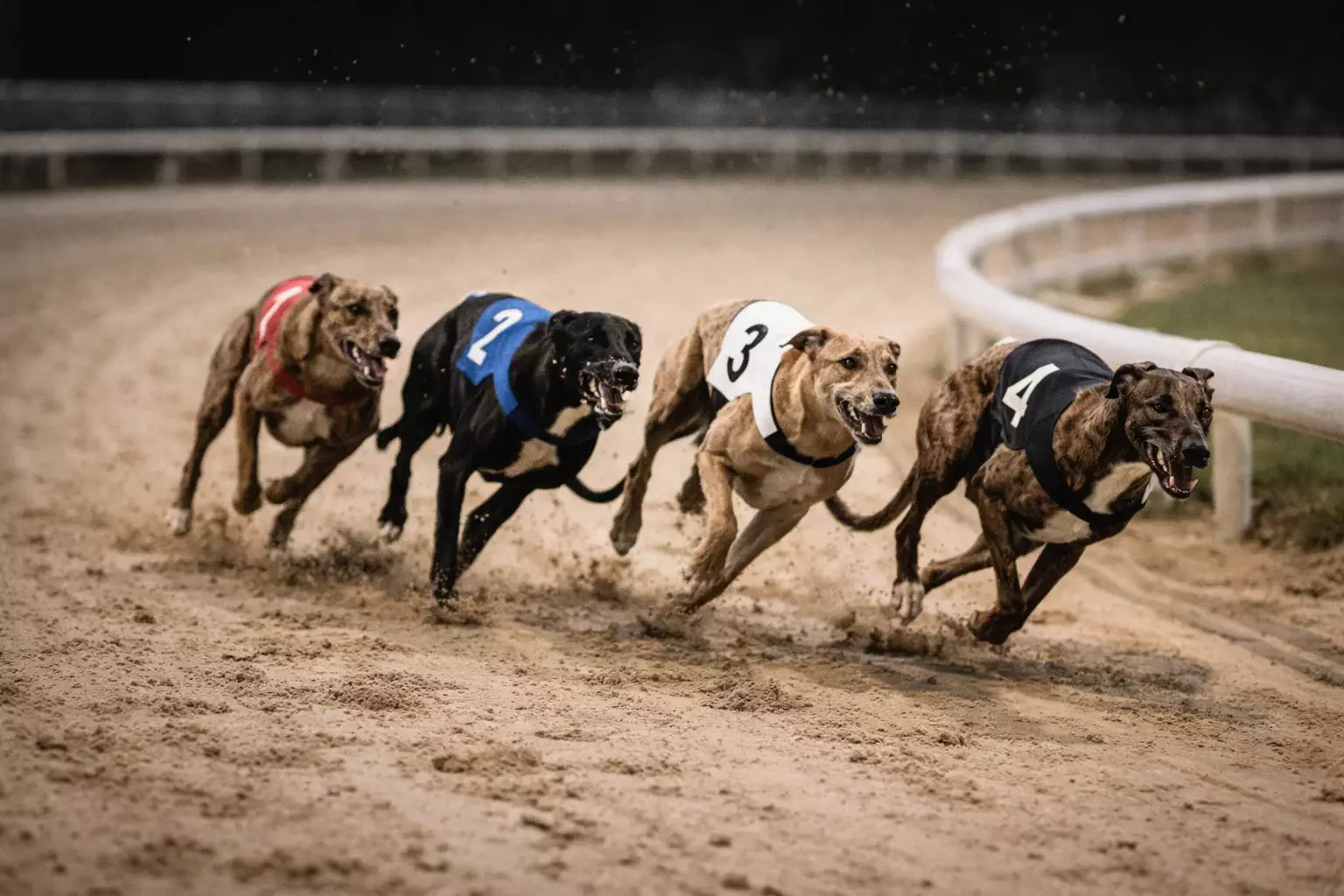
Each dog wears a coloured jacket corresponding to trap number: red for trap 1, blue for trap 2, white for trap 3, black for trap 4, orange for trap 5, and black-and-white stripes for trap 6. These colours appear on racecards and remain consistent across all GBGB tracks. Identifying trap assignments immediately positions each dog relative to rail proximity and starting configuration.
Dog Name, Trainer, and Owner
The racecard lists each greyhound's registered name alongside trainer and owner information. Trainer statistics matter—certain kennels specialise in particular distances, grades, or tracks. Trainers with strong Romford records often prepare dogs specifically for the 350-metre circuit, giving their runners tactical familiarity that translates into results.
Form Figures
Recent form appears as a string of numbers and letters, typically covering the last six races. Numbers indicate finishing position (1 for first, 2 for second, and so on), while letters denote incidents: F for fell, W for wide running, B for bumped, T for trapped. A form line reading "321241" shows a dog that finished third, second, first, second, fourth, and first across its recent outings—a consistent performer with proven winning ability.
Interpreting form requires context. Did the dog compete at Romford or another track? What distances and grades featured? A string of wins at a lower track may not translate against stronger Romford opposition. Conversely, placed finishes behind quality opponents can signal readiness to win when dropped in class.
Weight and Season
Greyhound weight appears in kilograms and offers insight into current condition. Significant weight drops may indicate fitness work; unexplained gains might suggest reduced training intensity. Bitches (female greyhounds) may also show season status—dogs returning from seasonal absence often need a run or two to regain peak form.
Times and Grades
Calculated time represents the dog's estimated finishing time over the race distance, adjusted for trap draw and early running. This figure allows comparison across races regardless of actual finishing time, which varies with going and race pace. Grade (A1 through A10 in descending quality) indicates the competition level—A1 runners face tougher opposition than A7 dogs.
Comments and Sectionals
Many racecards include brief comments describing recent run styles: "led throughout," "finished strongly," "crowded first bend." These observations supplement numerical data with qualitative insight. Sectional times, where available, break down performance into split segments—useful for identifying front-runners versus closers and predicting how dogs will interact at different race stages.
Form Guide Essentials
Form analysis in greyhound racing centres on recent performances rather than long-term career records. Dogs race frequently—often weekly—meaning form can shift rapidly between meetings. A greyhound that dominated three weeks ago may have since faced injury, lost fitness, or encountered tougher opposition. Current form trumps historical achievement.
Reading the Last Six Runs
Standard racecard presentation shows six recent results, reading right to left from oldest to newest. The most recent run carries the heaviest weight in analysis, but patterns across the sequence reveal trends. Improving form (positions trending downward: 6-4-3-2) suggests a dog finding its stride. Declining form (1-2-3-5) may indicate fading condition or inappropriate grade placement.
Look beyond finishing positions to race context. A fourth-place finish behind open-class competition may represent better form than winning against weak opposition. Grade codes adjacent to form figures help distinguish competitive quality across runs.
Sectional Analysis
Where sectional times are available, they reveal running style. Early pace figures show how quickly a dog reaches the first bend; run-in times indicate finishing strength. Front-runners typically post fast early sectionals but may fade if pressed; closers show modest early pace but strong finishes. Matching running styles against trap draws and likely race scenarios refines selection logic.
A dog with proven early pace drawn inside may dominate a field lacking other pace-setters. The same dog drawn outside against multiple front-runners might face early crowding and underperform. Sectional data converts static form into dynamic race predictions.
Recovery and Absence
Greyhounds returning from injury or seasonal breaks often need one or two runs to regain race fitness. Racecards may note absence duration; punters should discount first-run-back performances accordingly. A dog showing strong trials but moderate race results after layoff may improve sharply next time out.
Track Specificity
Form earned at other tracks requires translation to Romford conditions. Different circumferences, bend angles, and surfaces affect how dogs perform. A consistent winner at a larger track may struggle with Romford's tighter bends; a dog that laboured elsewhere might relish the 350-metre circuit. Where available, Romford-specific form carries more predictive value than aggregate career records.
Combining form analysis with trap statistics, trainer records, and going conditions builds a rounded assessment. No single factor guarantees results, but systematic form study reduces guesswork.
Betting Fundamentals
Greyhound betting in the UK offers a range of wager types, from simple win bets to complex permutation plays. Understanding the mechanics of each bet type—and when each offers value—distinguishes casual punters from systematic bettors. Romford's busy schedule provides ample opportunity to apply these concepts across meetings.
The scale of UK greyhound betting remains substantial. According to the GREY2K USA Worldwide Report, approximately £1.46 billion was wagered on greyhound racing in the UK during 2024, representing roughly one-quarter of global turnover on the sport. While this figure reflects a decline from £2.12 billion in 2020, greyhound racing maintains a significant presence in the UK betting market—particularly through BAGS coverage that populates betting shop screens throughout trading hours.
Interactive Tool
UK Turnover Decline, and UK Share of World Tracks
Calculate the exact percentage drop in UK greyhound betting turnover since 2020, and the UK's share of the global track network.
Percentage Decline
-
-
2020 Turnover
-
2024 Turnover
-
Absolute Drop
-
What this guide gives as two figures without the gap: "approximately £1.46 billion was wagered on greyhound racing in the UK during 2024... a decline from £2.12 billion in 2020." The percentage decline is never calculated — it's -31.1%, a drop of £0.66 billion.
UK Share of World Tracks
-
UK Tracks
-
World Tracks
-
Outside the UK
-
What this guide gives as two counts in separate sentences: "only 18 GBGB-licensed tracks remained operational... just 93 tracks operating across five countries worldwide." The UK's share of the global total is never calculated — it's 19.4%, meaning 75 tracks operate outside Britain.
Win and Place Bets
The win bet is the simplest form: back a dog to finish first. If it wins, you collect at the declared odds; if it loses, you lose your stake. Place bets pay out if your selection finishes in the top two (for races with five or six runners) or top three (larger fields), but at reduced odds—typically one-quarter the win price for standard each-way terms.
Each-way betting combines win and place stakes into a single wager. Half your stake backs the dog to win; half backs it to place. This structure offers downside protection when a fancied runner finishes second or third but reduces overall returns compared to a winning outright bet.
Forecast and Tricast Bets
Forecasts require selecting the first two finishers in correct order. Straight forecasts name a specific first and second; reverse forecasts cover both possible orders (doubling the stake). Computer Straight Forecast (CSF) returns are calculated by the tote after the race, based on the actual finishing prices, offering potentially larger payouts than bookmaker forecasts at fixed odds.
Tricasts extend the concept to the first three finishers in exact order. Combination tricasts cover all possible orderings of three selected dogs (six combinations, six times the unit stake). These exotic bets deliver substantial payouts when successful but require precision that reduces strike rates.
Tote Pools
Pool betting aggregates all wagers into a shared pot, with dividends calculated after deductions based on the final result. The tote offers win pools, place pools, exacta (forecast equivalent), trifecta (tricast), and occasionally jackpot pools spanning multiple races. Pool dividends can exceed fixed-odds returns when favourites lose, but may disappoint when heavily backed runners win.
Odds Formats and Conversion
UK bookmakers primarily display fractional odds (3/1, 5/2, 11/4), though decimal odds (4.00, 3.50, 3.75) appear on exchanges and some online platforms. To convert fractional to decimal, divide the first number by the second and add one. Understanding both formats prevents confusion when comparing prices across platforms.
Finding Value
Value exists when the true probability of an outcome exceeds the probability implied by the odds. A dog with a genuine 25% win chance (fair odds 3/1) offered at 4/1 represents value; the same dog at 2/1 does not. Systematic punters track their assessments against market prices, seeking discrepancies that compound over time into profitable returns.
Welfare Standards at Romford
Greyhound welfare shapes the regulatory framework governing licensed tracks including Romford. The Greyhound Board of Great Britain (GBGB) sets and enforces standards across its network, publishing transparent data on injury rates, fatalities, and retirement outcomes. For punters considering the ethics of their involvement, understanding these standards provides context beyond race results.
Injury and Fatality Data
The most recent GBGB injury and retirement data for 2024 reports a track injury rate of 1.07%—the lowest on record since comprehensive data collection began. Across 355,682 runs on GBGB-licensed tracks, 3,809 injuries were recorded. While any injury represents concern, the downward trend reflects sustained investment in track maintenance, veterinary oversight, and racing protocols.
Track fatality rates have similarly declined. The 2024 fatality rate stood at 0.03%, down from 0.06% in 2020—a halving over four years. In absolute terms, 123 greyhounds died on GBGB-licensed tracks during 2024, each a tragedy but collectively representing improved safety compared to historical baselines.
"I am particularly proud of the progress we have made around economic euthanasia," stated Mark Bird, Chief Executive of GBGB, commenting on the 2024 data release. "As a Board, we have been clear that putting a greyhound to sleep for economic reasons is unacceptable and I am pleased that we have reduced this by 98% since 2018." The figures bear this out: economic euthanasia cases dropped from 175 in 2018 to just 3 in 2024.
Injury Recovery Scheme
The Injury Recovery Scheme (IRS) provides financial support for veterinary treatment of injured racing greyhounds. According to official GBGB data, almost £1.5 million has been disbursed through the scheme since its 2018 launch. This funding covers surgeries, rehabilitation, and ongoing care for dogs whose injuries might otherwise end careers or lives.
The scheme ensures that cost does not determine treatment decisions. Trainers facing expensive veterinary bills can apply for IRS support, removing financial pressure that historically contributed to poor welfare outcomes. The rising utilisation of the scheme suggests increased awareness among trainers and willingness to pursue treatment options.
Kennel Standards and Inspections
GBGB licensing extends beyond track conditions to kennel environments where greyhounds live and train. Routine inspections verify space requirements, exercise provision, veterinary access, and general welfare compliance. The October 2025 Progress Report notes a 73% increase in routine GBGB kennel visits since 2022, reflecting intensified oversight of off-track conditions.
Licensed trainers must meet minimum standards for kennel size, enrichment, exercise paddocks, and veterinary arrangements. Regular inspections—both scheduled and unannounced—enforce compliance, with licensing sanctions available for persistent failures.
Transparency and Independent Oversight
"I have been hugely impressed by the willingness and enthusiasm of everyone I have already spoken to, to engage with the process of developing a strategy which will fulfil our shared aim of optimising the welfare of racing greyhounds, across their lifetimes," noted Professor Madeleine Campbell, Independent Director at GBGB and European Board of Veterinary Specialisation specialist in animal welfare. Her involvement in shaping the GBGB welfare strategy signals commitment to independent scrutiny.
The publication of annual injury and retirement statistics, once resisted by racing authorities, now forms a pillar of the sport's social licence. Romford punters can access this data, assess trends, and make informed judgments about whether welfare standards meet their expectations.
Retirement and Rehoming Programs
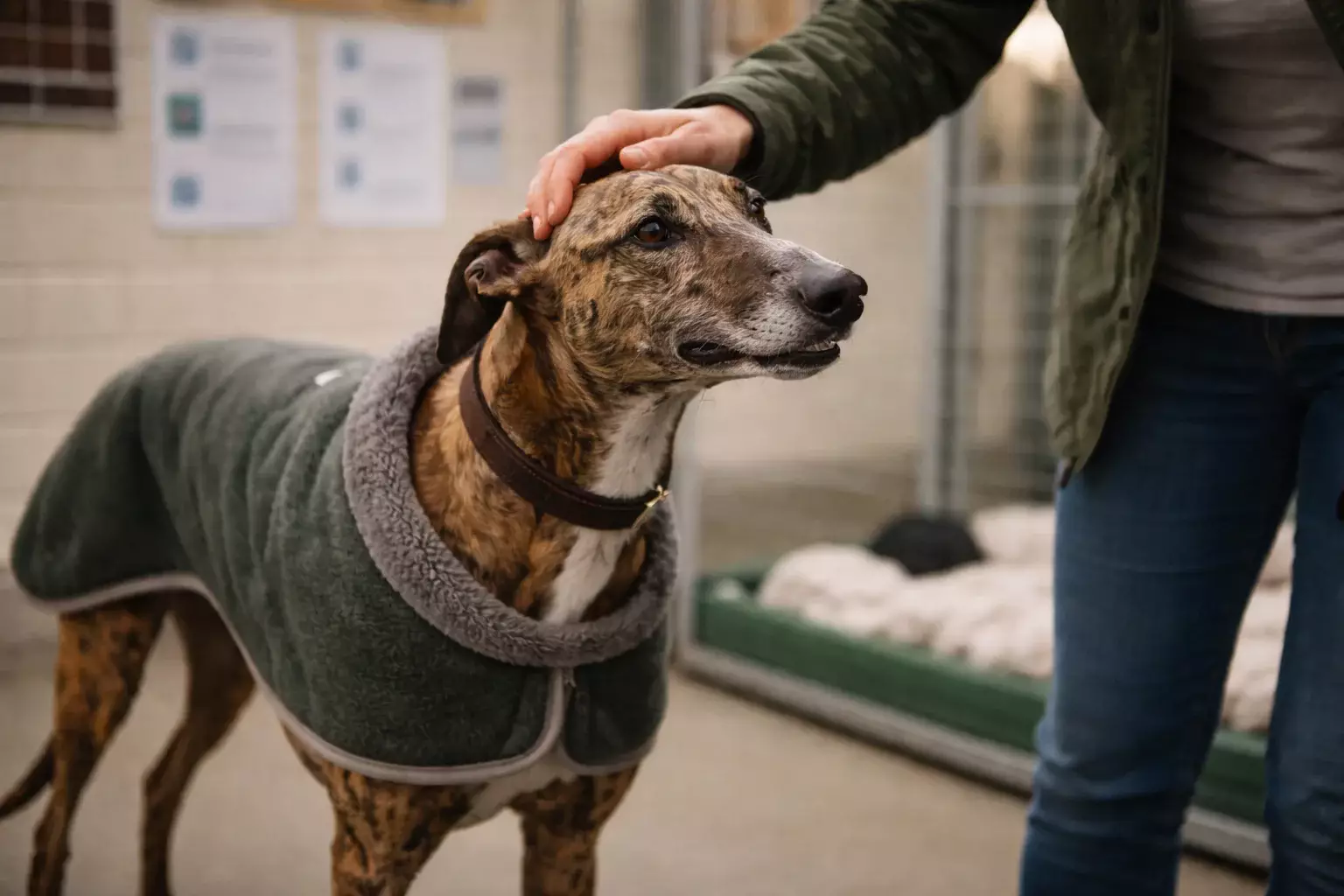
The fate of greyhounds after their racing careers remains central to welfare debates. GBGB-licensed racing has invested substantially in retirement infrastructure, with measurable improvements in rehoming rates and post-racing outcomes. For punters whose enjoyment depends partly on confidence in animal welfare, these programmes warrant attention.
Greyhound Retirement Scheme
The Greyhound Retirement Scheme (GRS) requires trainers to pay a bond upon each greyhound's registration—increased to £420 per dog in 2025. This deposit funds retirement support and creates financial accountability: trainers forfeit bonds if dogs are not properly retired through approved channels. Since its 2020 launch, the scheme has disbursed over £5.6 million to homing centres across the United Kingdom, as reported by Greyhound News UK.
The bond system aligns trainer incentives with welfare outcomes. Dogs reaching retirement trigger bond refunds when transferred to approved centres; those unaccounted for or disposed of improperly result in forfeiture. This mechanism has contributed to rising retirement rates—94% of greyhounds left racing through successful retirement in 2024, compared to 88% in 2018.
Homing Centres Network
Over 100 GRS-approved homing centres operate across the United Kingdom, providing transition environments for retired racers. These facilities assess each greyhound's temperament, address any health issues, and prepare dogs for domestic life before matching them with adoptive families. Centre standards must meet GBGB criteria to receive GRS funding, ensuring consistent quality across the network.
Adoption interest has surged. The GBGB Progress Report documents a 37% increase in adoptions from GRS-approved centres during the first half of 2025 compared to the same period in 2024. Public awareness campaigns, breed-specific education, and positive word-of-mouth from existing adopters have expanded the pool of potential homes.
The Economics of Retirement
Historically, economic euthanasia—destroying dogs because rehoming costs exceeded their perceived value—plagued greyhound racing. The dramatic reduction from 175 cases in 2018 to 3 in 2024 reflects both policy pressure and cultural change within the sport. Trainers now face reputational and financial consequences for poor retirement outcomes, while homing centre capacity has expanded to absorb retiring populations.
Critics note that dogs injured beyond rehabilitation or behaviourally unsuited to domestic life still face difficult outcomes. Not every greyhound becomes a successful pet. The 94% retirement rate acknowledges this reality—success means appropriate outcomes for the vast majority, not elimination of difficult cases entirely.
What Adopters Should Know
Retired greyhounds typically transition well to domestic life. Despite their athletic past, most ex-racers favour short bursts of activity followed by extended rest. Early socialisation with cats and small dogs varies—potential adopters should discuss prey drive assessments with homing centres before placement. The breed's gentle temperament, compact exercise needs, and adaptability to apartment living make retired greyhounds increasingly popular as urban pets.
London's only greyhound track produces a steady stream of retiring athletes, many of whom find homes in the capital and surrounding areas through local GRS centres.
Frequently Asked Questions
What time do races start at Romford Greyhound Stadium?
Romford hosts six race meetings each week with varying start times. Friday and Saturday evening cards typically begin around 7:00 PM. Wednesday and Saturday morning sessions start approximately 10:00 AM. Monday and Thursday afternoon BAGS meetings generally commence around 11:00 AM or early afternoon. Specific start times may vary by meeting type and season, so checking the official fixture list before attending or betting remains advisable. Evening meetings usually feature twelve races, with intervals of approximately fifteen minutes between each event.
How do I read greyhound form figures on a racecard?
Form figures represent finishing positions from recent races, reading from oldest on the left to most recent on the right. A sequence like "321142" indicates the dog finished third, second, first, first, fourth, and second across its last six outings. Letters within the string carry specific meanings: F denotes a fall, W indicates the dog ran wide, B shows bumping occurred, and T marks a trial rather than competitive race. Grades appear alongside times, helping you assess whether those positions came against strong or weak opposition. The most recent run typically carries the greatest predictive weight, though patterns across multiple races reveal whether form is improving, declining, or stable.
What distances are raced at Romford Stadium?
Romford's 350-metre circuit accommodates five standard racing distances. The 225-metre sprint starts on a bend and favours early-pace dogs with quick trap breaks. The 400-metre standard distance hosts the majority of graded racing, starting from a straight section. The 575-metre middle distance tests both speed and stamina over an extended journey. Marathon distances of 750 metres and 925 metres appear less frequently but attract specialist stayers and punters seeking alternatives to standard fare. Each distance produces different trap biases and tactical patterns, with form analysis needing adjustment based on the specific trip under examination.
Disclaimer
Gambling involves risk. Only wager what you can afford to lose, and seek help if betting becomes problematic. UK residents can contact the National Gambling Helpline on 0808 8020 133 or visit BeGambleAware.org for support and resources. This content is intended for adults aged 18 years and over.
The statistics, figures, and data presented in this guide come from publicly available sources including the Greyhound Board of Great Britain, official GBGB publications, industry reports, and verified news sources. While every effort has been made to ensure accuracy at the time of writing, data may change as new information becomes available. We recommend verifying current statistics through official GBGB channels for time-sensitive decisions.
This website operates independently and holds no commercial affiliation with Romford Greyhound Stadium, the Greyhound Board of Great Britain, Coral, or any licensed bookmaker. Race schedules, track specifications, and operational details are subject to change by venue management. For official information regarding race meetings, results, and attendance, consult the track's own communication channels.
Form analysis, trap statistics, and betting guidance presented here represent educational information rather than guaranteed outcomes. Past performance does not predict future results. All betting decisions remain the sole responsibility of the individual punter.
