 Romford Dogs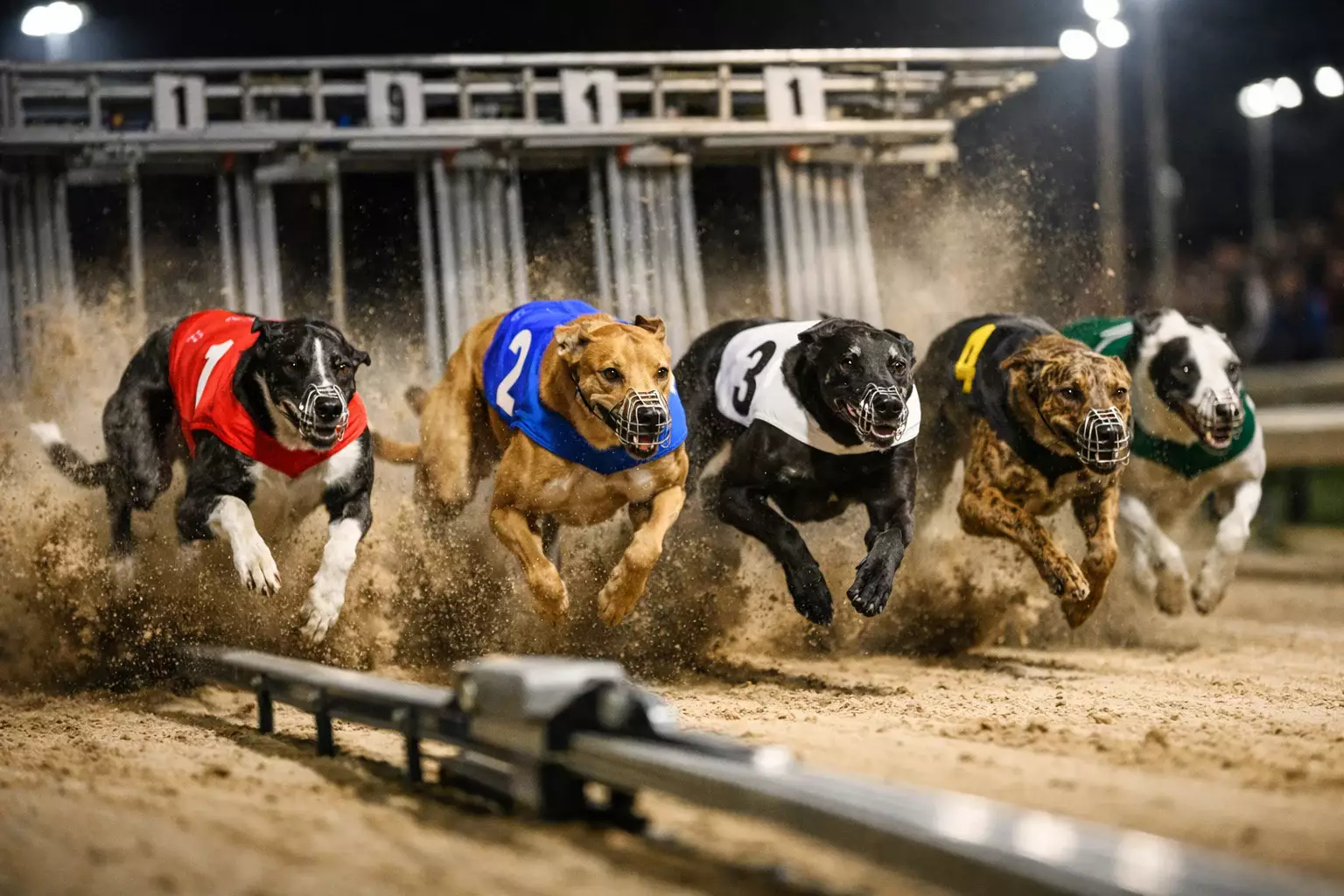
Best Greyhound Betting Sites – Bet on Greyhounds in 2026
Loading...
Pure speed wins. At 225 metres, Romford’s shortest distance offers no time for recovery, no second chances, and no room for tactical positioning. The greyhound that breaks fastest and runs straightest typically sees the finish line first. Sprint racing strips away the variables that complicate longer distances and reduces the contest to its most elemental form: which dog can cover the ground quickest from box to wire.
The 225m trip at Romford starts on a bend, placing traps at an angle that favours certain positions before a single stride is taken. This represents the shortest of Romford’s five racing distances (225, 400, 575, 750, and 925m), designed specifically for dogs whose talent lies in explosive acceleration rather than sustained pace. The track’s 350-metre circumference creates particularly tight bends at this distance. The race unfolds over roughly 13 to 14 seconds for class runners. Blink and you miss something.
Understanding what makes sprinters tick, which traps offer advantages, and how to read form for this distance helps separate informed selections from hopeful punts. The margins are tighter here than anywhere else on the card.
225m Characteristics
Romford’s 225m races begin on the back straight bend and finish on the home straight, covering approximately half the track’s 350-metre circumference. This configuration places enormous emphasis on early speed. A greyhound that takes two or three strides to find top gear has already lost ground it cannot regain. There is simply no time.
The bend start means runners must accelerate while navigating a turn. Dogs that struggle with cornering at pace find themselves wide and wasting lengths before the straight begins. The geometry punishes hesitation. A slow trapper not only trails the field but often gets forced even wider by rivals cutting across, compounding the disadvantage.
One-Bend Racing
Unlike longer distances where multiple bends create passing opportunities, the 225m features just the initial turn followed by a straight run to the line. Once the field straightens, position changes become rare. Leading dogs can follow the rail without interference. Chasing dogs must find clear lanes while sustaining full effort. The maths does not favour the chasers.
This single-bend format means that bend running ability matters intensely but only for those crucial first seconds. A dog might handle bends beautifully but trap slowly, losing any benefit its cornering would provide. Conversely, a wide-running dog with electric early pace might lead into the straight despite giving away ground on the turn.
Speed Over Everything
Stamina concerns do not exist at 225m. The distance is too short for any dog to tire in the traditional sense. What matters is absolute top speed and how quickly the dog reaches it. The physical demands differ from longer trips: explosive muscle engagement rather than aerobic endurance, maximal effort rather than paced running.
This creates distinct selection criteria. A dog with brilliant finishing speed but modest early pace suits middle distances where that closing kick matters. The same dog at 225m likely spends the entire race behind better trappers, never finding the opportunity to demonstrate its strength. Sprint selection begins and largely ends with early pace.
Track Specifics
Romford’s relatively tight circumference amplifies the bend dynamics. The 350-metre track produces tighter turns than larger venues, meaning wide runners lose more ground relative to railers. As London’s only remaining greyhound track following Crayford’s closure in January 2025, Romford now hosts all metropolitan sprint racing. Dogs with experience at bigger tracks may find Romford’s 225m bend sharper than expected. Full racing schedules and track information are available via the GBGB racing portal. Local form carries particular weight for this reason.
Trap Dominance
Trap biases at 225m reflect the bend start geometry. Outside traps, particularly 5 and 6, follow a wider arc that allows them to build speed through a more gradual curve. Inside traps face a tighter angle requiring sharper deceleration through the turn. The outside advantage is structural, built into the track layout rather than resulting from racing patterns.
Trap 6 often shows the strongest statistical performance over the sprint distance. Dogs drawn here can break cleanly, sweep around the bend on a natural line, and enter the straight with momentum. The position does not guarantee victory, but it provides a mechanical advantage that pure pace must overcome.
Inside Challenges
Trap 1 faces the most acute challenge. The angle from the inside box to the running rail requires immediate deceleration through the bend, then reacceleration into the straight. A trap 1 dog needs exceptional trapping speed and tight cornering ability simply to hold position. Without both attributes, the inside draw becomes a liability.
Dogs drawn inside that lack rapid trapping tend to get squeezed and shuffled back. Once behind at 225m, recovery becomes improbable. The race is effectively over for trailing runners before the straight begins. Form analysts noting consistent poor trap draws for inside boxes should consider whether the dog’s record reflects genuine ability or geometric misfortune.
Market Implications
Sprint markets often undervalue trap bias relative to demonstrated class. A high-class dog drawn in trap 1 against moderate rivals in trap 6 faces a genuine test. The class edge exists, but so does the positional disadvantage. Prices sometimes reflect only the class comparison, creating opportunities for those who account for trap geometry.
Conversely, moderate dogs with perfect draws occasionally attract less interest than they deserve. The market respects historical performance, but 225m performance depends heavily on circumstances that change race by race. A dog might have lost badly from trap 1 last time yet represent decent value drawn in trap 6 today.
Spotting Sprinters
Identifying genuine sprint specialists requires looking beyond simple win records. A dog might win regularly at 400m through solid early pace and stamina but lack the explosive acceleration that sprint racing demands. The form figures tell part of the story; the sectional times and running comments complete it.
Early-pace ratings indicate how quickly dogs reach racing positions. Sprinters need ratings suggesting they lead or lie close at the first bend consistently, not occasionally. A dog rated as showing early pace sometimes but often settling in mid-division probably suits longer trips. Sprint success requires near-constant fast breaking.
Physical Indicators
Sprint greyhounds tend toward muscular compactness rather than rangy athleticism. The physique favours explosive power over endurance. This is not a rigid rule, but paddock observation often reveals which dogs possess the physical characteristics associated with sprinting. Strong hindquarters and a powerful drive suggest speed. Lighter builds with longer stride patterns suggest stamina running.
Weight changes matter more at sprint distances. A dog carrying extra weight must accelerate that additional mass from a standing start, which costs precious tenths of seconds. Significant weight increases between races warrant attention when the race distance leaves no room for gradual acceleration.
Form Reading for Sprints
Previous 225m form at Romford provides the clearest guide. Times over the distance reveal raw speed capability. Running comments describing how dogs handled the bend start indicate whether their early pace translated into position or dissipated into trouble. A pattern of leading into the straight followed by fading suggests genuine sprint ability being deployed over the wrong distance.
Trial times over sprint distances help assess newcomers or dogs returning from breaks. These trials lack the competitive element of racing but show fundamental speed. Dogs posting fast sprint trials with clean breaks deserve respect even without race form to support them.
Trap Behaviour
Some dogs trap well consistently. Others trap well intermittently. At 225m, intermittent trapping is insufficient. Form readers should note not just whether a dog led early but how consistently it achieved good breaks. A dog that traps brilliantly three times in five starts and moderately twice has not shown the reliability sprint success requires.
Video replays of previous runs reveal trapping behaviour better than written comments. How quickly the dog exits the box, whether it breaks straight or angles across, and how it handles the initial bend provide information that statistical form cannot capture. For sprint specialists, this visual evidence often proves decisive.
Important Notice
This article provides educational information about Romford 225m races and greyhound sprint racing. Trap biases and form patterns describe historical tendencies and do not guarantee future outcomes. All betting involves financial risk. Conduct your own analysis before placing any bets, and never wager more than you can afford to lose. Responsible gambling tools including deposit limits and cooling-off periods are available through licensed operators. If gambling causes concern, support is available from GambleAware and the National Gambling Helpline. You must be 18 or over to place bets in the UK.