 Romford Dogs
  Available in US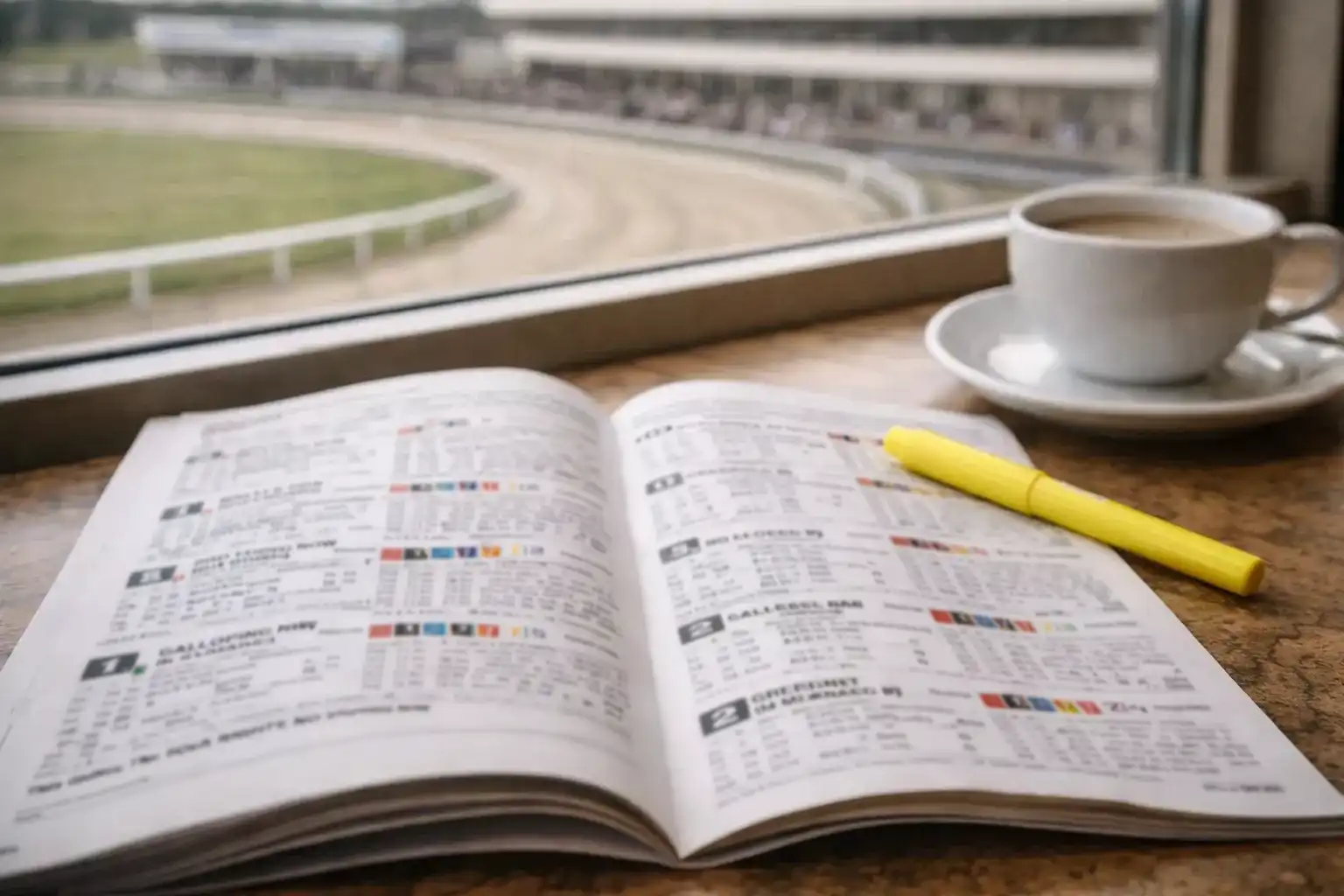
Speak the language. Greyhound racing uses specialised vocabulary that can mystify newcomers while conveying precise meaning to those familiar with the sport. Understanding this terminology unlocks racecards, form guides, and expert commentary that might otherwise read as code. The glossary below covers essential terms across racing, betting, and form analysis.
Terminology reflects the sport’s history and technical requirements. Some terms derive from coursing traditions that predate commercial racing. Others emerged from betting practices developed over decades of UK greyhound racing. Learning the vocabulary does not guarantee profitable betting, but misunderstanding terms virtually guarantees confusion.
The Greyhound Board of Great Britain oversees 18 licensed tracks in the UK, each using consistent terminology that this glossary explains. Whether you follow racing at Romford or any other venue, the same language applies across the licensed circuit.
Terms A to M
All-weather: Track surface designed for racing in various conditions; UK greyhound tracks use sand-based surfaces rather than turf.
BAGS: Bookmakers Afternoon Greyhound Service; meetings scheduled specifically for betting shop audiences, typically daytime fixtures.
Bend: The curved sections of the track; dogs negotiate multiple bends depending on race distance.
Box: Starting trap from which greyhounds are released; numbered 1-6 from inside rail outward, with corresponding coloured jackets.
Bumped: Contact during racing that affects a dog’s momentum or position; noted in form comments.
Closer: A dog that finishes strongly, typically from mid-division positions; relies on stamina rather than early pace.
Dam: The mother of a greyhound; breeding records include dam information alongside sire details.
Derby: Premier competition in greyhound racing; the English Greyhound Derby represents the sport’s most prestigious event.
Distance: The length of a race, measured in metres at UK tracks; Romford offers 225m, 400m, 575m, 750m, and 925m.
Drift: When a dog’s odds lengthen (become more generous) before a race, typically due to money backing other runners.
Early pace: Speed shown in the initial stages of a race; critical for short distances and trap position.
Form: A dog’s recent racing record, typically shown as finishing positions in most recent runs.
Front-runner: A dog that leads from early stages; relies on early pace to establish and maintain position.
GBGB: Greyhound Board of Great Britain; the regulatory body overseeing licensed UK greyhound racing. Under GBGB oversight, track injury rates fell to a record low of 1.07% in 2024.
Going: Track conditions affecting racing surface; described as fast, standard, or slow depending on moisture and temperature.
Grade: Classification system (A1-A10 and beyond) indicating a dog’s racing ability level; lower numbers indicate higher quality.
Grader: Official responsible for placing dogs in appropriate grades based on recent form and times.
GRS: Greyhound Retirement Scheme; GBGB-administered programme requiring financial bonds to support post-racing homing.
Hare: The mechanical lure that greyhounds chase around the track; runs on a rail inside or outside the running surface.
Home straight: The final straight section leading to the finish line where races are decided.
IRS: Injury Recovery Scheme; GBGB fund providing veterinary treatment costs for injured racing greyhounds.
Kennel: Licensed facility where racing greyhounds are housed and trained; subject to GBGB inspection and standards.
Licensed: Operating under GBGB regulation; distinguishes regulated racing from informal or independent activities.
Lure: Another term for the mechanical hare that greyhounds chase during races.
Maiden: A greyhound that has not yet won a race; maiden races restrict entry to non-winners.
Middle runner: A dog that typically races in mid-track position rather than hugging the rail or running wide.
Terms N to Z
Open race: Competition open to dogs of different grades, typically featuring higher quality fields than graded events.
Paddock: Area where greyhounds parade before racing, allowing assessment of condition and temperament.
Photo finish: Electronic timing image used when the naked eye cannot determine finishing order.
Promotion: Movement to a higher (lower-numbered) grade following successful performances.
Puppy: A greyhound under two years of age; puppy races restrict entry by age.
Racecard: Programme containing race information including runners, form, trap draws, and breeding details.
Rail: The inside boundary of the track; dogs running on the rail cover less distance than those running wide.
Relegation: Movement to a lower (higher-numbered) grade following poor performances.
Reserve: Substitute dog entered in case a declared runner is withdrawn; may not run if all declared runners participate.
Sectional: Timing for portions of a race, typically showing splits at various track positions.
Sire: The father of a greyhound; influential in assessing breeding quality and distance preferences.
Slow away: Poor start from traps; noted in form comments and affecting early positioning.
SP (Starting Price): Official odds at race start, used to settle bets when no specific price was taken.
Sprinter: A greyhound suited to short distances (225m-400m), relying on explosive early pace.
Stewards: Officials responsible for race integrity, rule enforcement, and inquiry decisions.
Stayer: A greyhound suited to longer distances, possessing stamina that shorter trips do not test.
Tote: Pool betting system where returns depend on total pool divided among winning bets.
Trainer: Licensed individual responsible for the care, conditioning, and race preparation of greyhounds.
Trap: Starting box; used interchangeably with “box” to describe starting position.
Trial: Practice run, typically solo or in small groups, used to assess fitness or distance suitability.
Wide runner: A dog that races away from the rail, losing ground on bends but finding cleaner running lines.
Weights: A greyhound’s racing weight, recorded before each race; significant changes may affect performance.
Winner: First past the post; the dog whose nose reaches the finish line first claims victory.
Betting Abbreviations
E/W: Each-way; a bet covering both win and place at combined stakes.
FC: Forecast; predicting first and second in correct order.
TC: Tricast; predicting first, second, and third in correct order.
NAP: Best bet of the day; a tipster’s strongest selection.
NB: Next best; second-strongest selection after the NAP.
Evs: Evens or 1/1; a winning bet returns double the stake.
Odds-on: Prices shorter than evens, meaning potential profit is less than the stake risked.
SP: Starting Price; the official odds at race off used for settlement.
BOG: Best Odds Guaranteed; bookmaker promise to pay the better of the price taken or SP.
NR: Non-runner; a declared dog that is withdrawn before the race.
The wagering volumes involved in UK greyhound racing remain substantial. Approximately £1.81 billion was bet on the sport in 2024, spread across fixed-odds bookmakers and tote pools. Understanding betting terminology helps navigate this market regardless of which wagering approach you prefer.
Form String Characters
1-6: Finishing position in most recent races, with 1 indicating a win.
-: Separator between individual race results.
F: Fell during the race; relatively uncommon but significant when it appears.
0: Finished but not in the first six; indicates struggling form.
D: Disqualified; result removed following steward inquiry.
Reading form strings efficiently requires recognising these characters and understanding what patterns they reveal about recent performance trends. A string showing 1-1-1-2-1 tells a very different story than 5-4-6-0-5, and neither requires detailed race reports to convey their essential meaning.
Important Notice
This glossary provides general definitions for educational purposes. Terminology usage may vary slightly between sources and evolve over time. Racing rules and definitions are governed by GBGB; consult official documentation for authoritative interpretations. Understanding terminology does not guarantee betting success; all gambling involves financial risk. Bet responsibly and only with funds you can afford to lose. You must be 18 or over to bet in the UK.
Greyhound Racing Terminology — More on this topic at results romford dogs.
See also Romford Dogs Race Guide.
