 Romford Dogs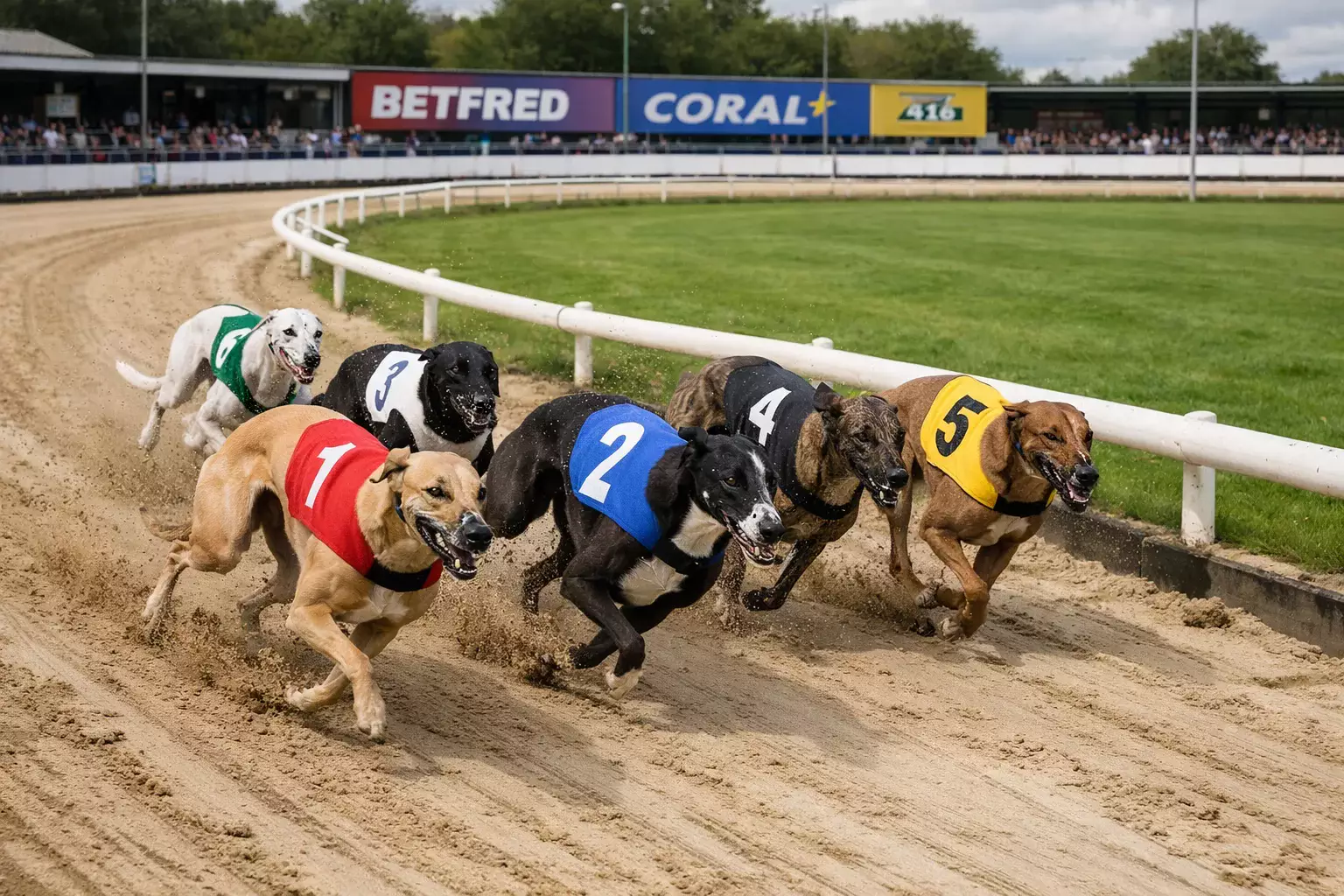
Best Greyhound Betting Sites – Bet on Greyhounds in 2026
Loading...
Every greyhound racing at a GBGB-licensed track in the UK carries a grade, a classification that slots the dog into competition with others of similar ability. The grading system runs from A1 at the top down through A10 at the entry level, with additional categories for puppies, sprint specialists, and marathon runners. Understanding what these letters and numbers mean separates the casual observer from someone who can actually read a racecard with purpose.
The system exists to create competitive racing. Nobody benefits from mismatches where one dog dominates by five lengths every time. Grades ensure that a quality field lines up in each race, dogs separated by fractions of seconds rather than class chasms. For punters, grades provide the first filter when assessing any race: know the grade, and you know roughly what calibre of dog you are watching.
Grade Structure
The A-grade scale forms the backbone of UK greyhound classification. A1 represents the elite, the fastest and most consistent performers at any given track. A2 sits one rung below, then A3, and so on down the ladder. Most tracks use grades A1 through A7 or A8, though some extend to A9 and A10 for dogs that struggle to find their level elsewhere. The system applies across all 18 licensed GBGB tracks, though each venue calibrates its own standards based on the quality of dogs racing there.
What constitutes an A3 at one track might be an A4 at another. Romford, as a busy metropolitan venue, tends to attract strong fields across the board. A dog graded A5 at Romford may well find itself competing at A4 if it moves to a track with shallower reserves of quality. This relativity matters when assessing form from different venues.
Specialist Categories
Beyond the standard A-grades, several specialist categories exist. Sprint races over shorter distances carry S-grades for dogs that excel at the explosive, trap-to-wire style of racing that short courses demand. These runners might lack the stamina for standard distances but possess the early pace to burn off rivals before the first bend.
Marathon grades cover the opposite end of the spectrum, reserved for dogs racing over 700 metres or more. Stamina specialists often cannot match the early speed of their sprint-grade counterparts, but they grind down opponents over the longer journey. Some tracks, including Romford with its 925-metre distance, regularly card marathon races that attract this particular breed of runner.
Puppy grades apply to dogs under a certain age threshold, typically 24 months. Young greyhounds develop at different rates, and puppy racing allows promising juveniles to gain experience without being thrown immediately against battle-hardened seniors. The nursery grades feed directly into the open A-grade system once dogs mature and establish their true ability level.
Open Races
Open races sit outside the grading structure entirely. These events invite entries based on specific criteria: past performance, qualifying times, or competition rules that supersede normal grade restrictions. Open races often serve as qualifiers for prestigious competitions or as feature events with enhanced prize money. The best dogs from multiple grades might compete in the same open race, making these contests particularly difficult to assess but often compelling viewing.
Promotion and Relegation
Grades shift based on performance. A dog that wins consistently at one level will find itself promoted to race against tougher competition. Conversely, a runner struggling against its current grade drops down to find a more suitable class. This fluidity keeps racing competitive and prevents any single dog from dominating indefinitely at an artificially low level.
The mechanics vary by track, but most operate on a combination of winning times and finishing positions. Win an A5 race in a time that would be competitive at A4 level, and promotion follows swiftly. String together three or four poor finishes at A3, and expect a drop to A4 or lower. Racing managers at each track make these calls, using a blend of objective time data and subjective assessment of how races unfolded.
Understanding Grade Movement
Smart punters track grade changes closely. A dog rising through the grades has demonstrated genuine improvement, whether through physical maturation, better training, or simply finding the racing style that suits it. But promotion also means facing stiffer competition. The question becomes whether the improvement that earned promotion will continue against better rivals.
Drops carry their own signals. Sometimes a dog descends because the current grade simply proved too hot. These runners often bounce back immediately when facing easier opposition. Other times, a drop indicates genuine regression: injury recovery, loss of form, or simply ageing out of peak performance. Reading which scenario applies requires checking recent form figures, times, and any notes about running style.
The population of registered greyhounds directly affects grade mobility. In 2024, GBGB recorded 5,133 new greyhound registrations, down from 6,769 in 2021. A smaller active racing population can shift the competitive balance at certain grades, particularly at tracks with thinner reserves of quality dogs.
Track-Specific Considerations
Each track maintains its own grading committee. What works at Romford may not apply at Towcester or Nottingham. Dogs transferring between tracks often see their grade adjusted to reflect the local standard. A runner graded A3 at a smaller provincial track might find itself reclassified as A4 or A5 upon arriving at a more competitive venue.
For punters following dogs across multiple tracks, this adjustment period creates both risk and opportunity. A newly transferred dog may take time to adapt, making it vulnerable in early outings. Alternatively, a quality runner from a strong track arriving at a weaker venue might be undervalued by the market until it proves itself locally.
Grade Impact on Betting
Grades serve as the starting point for any betting analysis, not the endpoint. Knowing that six A4 dogs will contest a race tells you something about the general quality level, but grades alone cannot identify the winner. What they do provide is context: the lens through which individual form figures make sense.
A dog showing form figures of 111 at A6 level has been dominant, but stepping up to A4 represents a significant jump. Two grade levels typically translate to several lengths of ability difference. Can that winner handle faster rivals? Will its early pace hold up against dogs accustomed to quicker breaks? These questions matter more than the raw form string.
Value in Grade Transitions
Some of the best betting opportunities arise during grade transitions. A dog newly promoted after two dominant wins often attracts enthusiastic support from punters who have watched it demolish lower-level opposition. The market may overreact, pricing the improver too short without accounting for the step up in class.
The opposite scenario also presents value. A quality dog that has just dropped a grade after a narrow defeat in a hot race might be dismissed as regressing. If the drop resulted from running into one exceptional rival rather than genuine decline, the lower grade could offer ideal conditions for a return to winning form.
Check the GBGB racing information for detailed rules on how grades operate across licensed tracks. Understanding the administrative framework helps contextualise the movements you see on individual racecards.
Grade Consistency and Specialisation
Some dogs find a grade where they become regular winners without ever earning promotion. These consistent performers learn their level and exploit it. They know the track, run their race, and collect wins without ever testing themselves against better opposition. For punters, these dogs offer reliability within their class but limited upside if stepped up.
Distance specialists add another dimension. A dog might grade as A3 over 400 metres but struggle to replicate that form over 575 metres. The standard grade applies, but distance preferences matter. Always check whether a dog’s grade was established over the same distance as the race you are assessing.
Important Information
Greyhound grades provide classification context but do not guarantee race outcomes. Individual performances vary, and factors beyond grading affect results. Betting on greyhound racing carries financial risk, and stakes should reflect what you can afford to lose. Support services including GamCare and BeGambleAware offer assistance if gambling becomes problematic.
This content is for informational purposes only and does not constitute betting advice. No affiliation exists between this publication and the GBGB, any licensed track, or any bookmaker.