 Romford Dogs
  Available in US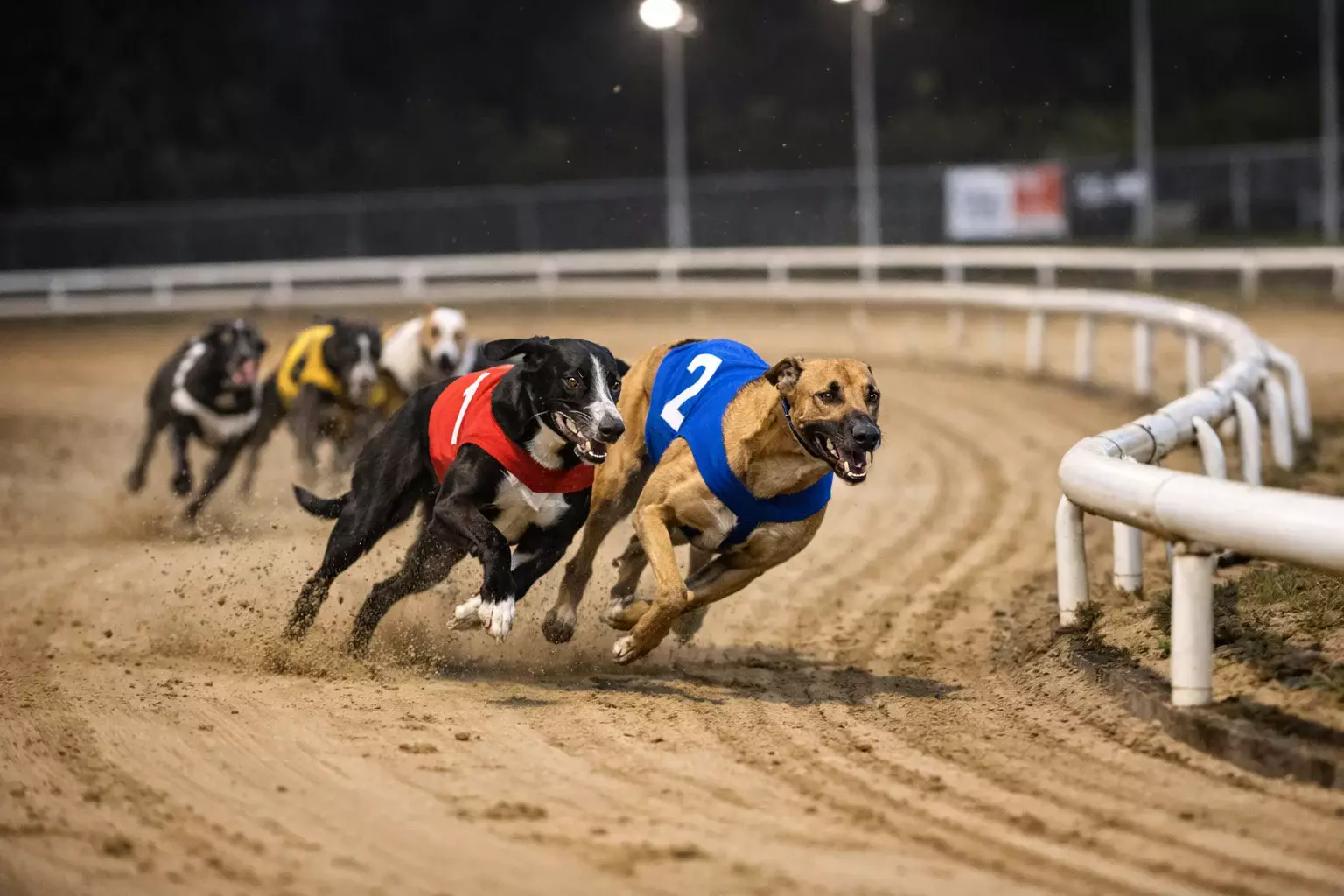
The 575m distance at Romford occupies the middle ground in greyhound racing, and that phrase carries tactical weight beyond mere measurement. Neither a flat-out sprint nor a true stamina test, races over this distance reward greyhounds with early pace and enough reserve to maintain it through two bends. Getting the selection right requires understanding what makes middle distance racing different from the sprints and stayers’ trips.
Romford’s 350-metre circumference produces tight bends that punish wide runners more severely than larger tracks might. As London’s sole greyhound track following Crayford’s January 2025 closure, Romford now hosts the capital’s entire licensed racing programme across its five distances. At 575m, dogs navigate two full bends before the finish, creating multiple opportunities for trouble and multiple points where position matters. The start sits on a bend, adding another variable that separates this distance from the standard 400m trip.
Understanding how trap draws influence outcomes, which form indicators matter most, and how the bend start shapes race dynamics helps separate profitable selections from hopeful guesses. The middle ground demands attention to detail.
575m Characteristics
Romford’s 575m races begin on the back straight bend, placing traps at an angle to the running rail rather than parallel to it. This configuration means that inside draws face an immediate tight turn while outside traps can follow a wider, smoother arc before straightening. The advantage sounds intuitive, but execution depends heavily on individual running styles and trap behaviour.
The bend start distinguishes 575m from the conventional 400m distance where greyhounds break from boxes positioned on the home straight. At 400m, early pace translates almost directly into first-bend position. At 575m, the initial burst happens on the bend itself, and dogs that struggle with bends off the break often find themselves trailing before the race properly begins.
Two-Bend Racing
After the opening bend, runners cover a back straight before hitting the second turn. This sequence rewards different attributes than a straight sprint. A greyhound might possess electric early speed but lack the cornering ability to maintain position through two bends at racing pace. Conversely, dogs that show moderate early pace but corner efficiently can gain lengths where others lose them.
The second bend matters as much as the first. Dogs that tire approaching the home turn lose ground at the worst possible moment, within sight of the finish but unable to sustain their position. Form analysts look for dogs that maintain their running through the final bend rather than fading as stamina requirements bite. The distance is long enough to expose those without genuine two-bend capabilities.
Pace and Stamina Balance
Middle distance racing at Romford demands a specific combination. Pure sprinters often struggle to hold their speed through the extended trip. Pure stayers may lack the early pace to reach a forward position before the first bend closes. The ideal 575m performer shows enough speed to compete from the traps while possessing the conditioning to sustain that effort.
Trainers preparing dogs for 575m events typically balance speed work with endurance training. A dog moving up from 400m needs time to build stamina. A dog dropping down from 750m might need sharpening to compete with speedier rivals. Recent form at the actual distance provides clearer guidance than results at different trips, however impressive those results might appear.
Trap Bias at 575m
The bend start at 575m produces trap biases that differ from Romford’s straight-start races. Outside traps (5 and 6) generally perform better over this distance because the bend geometry favours wider positions. Inside draws must navigate a tighter arc immediately off the break, often losing ground to runners that can take a more gradual line into the first straight.
Trap 1 faces the most acute angle at the break. Dogs drawn here need exceptional early pace simply to hold position, let alone gain ground. A trap 1 runner that traps slowly at 575m frequently finds itself buried on the rail with limited passing options. The inside rail can become a prison for dogs without the speed to lead or the patience to wait for gaps.
Middle Traps
Traps 3 and 4 present more nuanced scenarios. These middle positions avoid the extreme angles of the inside while lacking the clear arc advantage of the outside. Runners drawn here depend heavily on what surrounds them. A trap 3 dog between two wide-running rivals might find clean air. The same dog between two railers could find itself squeezed and fighting for room.
Form readers assessing middle trap draws should examine the entire field, not just their selection. How neighbouring dogs run tells you more about the likely race shape than the trap number alone. A middle draw in a field of railers differs fundamentally from a middle draw in a field of wide runners.
Statistical Patterns
Long-term statistics at Romford show outside traps winning more often at 575m than at shorter distances. This pattern reflects the bend start geometry rather than any mysterious advantage. It also means that short-priced favourites drawn wide deserve their market position more than favourites drawn on the rail.
Intelligent betting at 575m accounts for these biases without becoming enslaved to them. A class greyhound can overcome a poor draw through sheer ability. A moderate greyhound with a perfect draw still needs to execute. The bias provides context, not certainty.
Form Indicators
When assessing 575m contenders, recent runs at the same distance carry more weight than overall form. A dog showing three wins at 400m followed by a disappointing step up to 575m tells you something the win record obscures. The reverse applies equally: a dog struggling at sprint distances might find its rhythm when given more room to operate.
Sectional times reveal more than finishing times alone. A greyhound that runs fast early sections but fades in the latter stages may lack the stamina for 575m despite respectable overall times. Consistent sectionals suggest a dog that handles the distance genuinely rather than hanging on after a fast start.
Bend Running
Racecard comments describing how dogs handle bends become especially relevant at 575m. Phrases indicating tight bend running suit this distance. Descriptions of wide running or difficulty on turns raise flags. Two bends at racing pace expose cornering weaknesses that shorter trips might hide.
Previous 575m performances at Romford itself provide the clearest evidence. Track characteristics vary, and a dog that handles bends well at a larger track might struggle with Romford’s tighter 350-metre circumference. With only 18 licensed UK tracks remaining as of January 2025, dogs frequently move between venues, making this cross-track form comparison increasingly relevant. Full details of race schedules and distances appear on the GBGB racing pages. Local form trumps imported form, particularly for distances where track geometry matters as much as raw ability.
Weight and Condition
Middle distance races place different physical demands than sprints. Dogs carrying extra weight may struggle to sustain speed through the extended trip. Significant weight changes between races, particularly increases, warrant attention when the race involves more than one bend.
Condition comments from kennel sources can prove valuable. A trainer noting that a dog has been working well over longer trips signals confidence in its stamina. Conversely, caution about distance suitability from those who know the dog best should not be ignored. The middle ground rewards prepared runners and exposes those stepping beyond their comfort zone.
Important Notice
This article provides general information about Romford 575m races for educational purposes. Trap biases and form patterns describe tendencies, not guarantees; individual race outcomes depend on numerous factors beyond statistical averages. Always conduct your own analysis before making betting decisions. Gambling involves financial risk; bet only with money you can afford to lose and consider using deposit limits or other responsible gambling tools. If gambling becomes problematic, contact the National Gambling Helpline or visit GambleAware for support.
Romford 575m Races — More on this topic at results romford dogs.
See also UK Greyhound Kennelling Standards.
