 Romford Dogs
  Available in US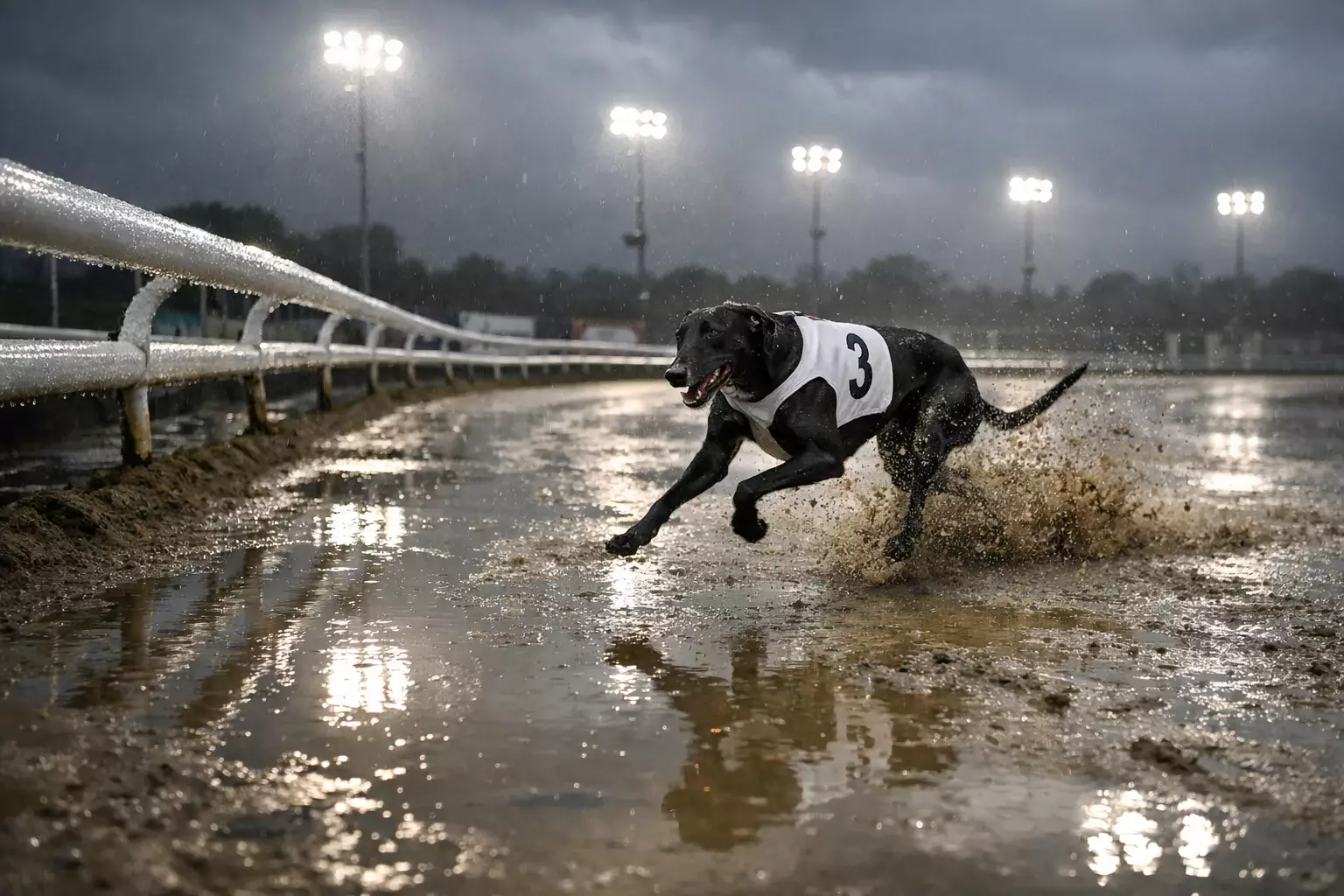
Greyhound racing happens outdoors, exposed to whatever weather arrives. Rain softens tracks, wind affects running, and temperature shifts change surface behaviour. These conditions alter how races unfold in ways that form figures alone cannot capture. Conditions change everything, and punters who ignore weather do so at their cost.
Track surfaces respond to weather dynamically. The same dog on the same track can produce markedly different times depending on whether the sand is dry and fast or waterlogged and slow. Understanding these relationships helps interpret form more accurately and adjust expectations appropriately for conditions on any given race day.
Weather Effects
Rain represents the most significant weather factor for greyhound racing. Wet conditions soften sand surfaces, reducing grip and slowing times. Heavy rain can waterlog tracks to the point where racing becomes unsafe, leading to meeting abandonment. Moderate rain produces challenging conditions that some dogs handle better than others.
Sand-based surfaces like Romford’s absorb water but drain at varying rates depending on underlying construction and recent maintenance. A sharp shower followed by drying time affects racing differently than persistent drizzle throughout a meeting. Both produce wet going, but the character of that going varies.
Wind Effects
Wind influences greyhound racing more than casual observers realise. Dogs running into headwinds face increased resistance that slows times and saps energy. Tailwinds assist speed but may disrupt balance. Crosswinds create unpredictable effects depending on track orientation and dog positioning.
Exposed tracks suffer more from wind than sheltered venues. Romford’s urban location provides some protection from extreme gusts, though conditions vary with wind direction and intensity. As one of only 18 licensed UK tracks remaining after Crayford’s January 2025 closure, Romford’s particular microclimate characteristics have become increasingly relevant for the concentrated pool of dogs now racing there. Evening meetings often encounter calmer conditions than daytime sessions when thermal effects strengthen breezes.
Temperature Considerations
Temperature affects both surface behaviour and dog physiology. Cold conditions firm surfaces, potentially producing faster times. Hot weather softens sand and stresses dogs, potentially slowing times and increasing fatigue. Extreme temperatures at either end create conditions that diverge from normal form patterns.
Seasonal patterns establish baseline expectations. Winter meetings often run on firmer going than summer equivalents. Dogs accustomed to one season may need adjustment time when conditions shift. Tracking seasonal effects helps calibrate expectations across the racing calendar.
Surface Maintenance
Track maintenance interacts with weather effects. Well-maintained surfaces drain better and recover faster from rain. The GBGB requires licensed tracks to follow maintenance protocols, with the Sports Turf Research Institute providing quarterly consultations to monitor surface quality. These efforts help maintain safe and consistent racing surfaces, with track injury rates falling to a record low of 1.07 percent in 2024.
Recent maintenance activity affects going regardless of weather. Fresh sand behaves differently than compacted surfaces. Harrowing patterns influence drainage. Knowing when a track last received maintenance helps interpret current conditions.
Reading Going Reports
Going reports describe current track conditions using standardised terminology. Common descriptions include fast, good, standard, slow, and wet, though exact terminology varies between tracks and reporting sources. These labels provide shorthand for conditions that affect racing in specific ways.
Fast going indicates firm, dry surfaces where dogs can achieve quick times. Conditions favour speed specialists and may produce personal bests. Standard going represents typical conditions where form reads normally. Slow or wet going indicates softer surfaces where times lengthen and stamina becomes relatively more important.
Interpreting Reports
Going reports provide starting points rather than complete pictures. A report issued before racing may not reflect conditions that develop during a meeting. Rain arriving mid-card changes going even if the initial report said fast. Observant punters note conditions as meetings progress rather than relying solely on pre-meeting reports.
Times from early races indicate actual conditions better than any report. If the first couple of races produce times slower than expected for the field quality, conditions are probably heavier than reported. Conversely, unexpectedly quick early times suggest faster going than labels implied.
Dog Preferences
Some dogs show clear going preferences that affect performance significantly. Wet weather specialists may struggle on fast ground. Speed merchants may flounder when conditions turn heavy. Identifying these preferences from historical form helps predict how specific runners will handle current conditions.
Check form figures for previous runs in similar conditions. Dogs that have won or placed on wet going have demonstrated relevant ability. Dogs whose form deteriorates whenever conditions soften may struggle regardless of other positive form indicators. Going preferences represent genuine factors that override pure ability under certain conditions.
The GBGB welfare data demonstrates the industry’s focus on surface conditions as part of broader safety improvements.
Betting Adjustments
Weather-aware betting requires adjusting assessments for current conditions. Form achieved on fast going may not translate to wet meetings. Times set in ideal conditions provide unreliable benchmarks when conditions deteriorate. Recognising when form needs adjustment prevents backing selections unsuited to the day’s racing.
Weight form earned in similar conditions more heavily than form from different going. A dog that won impressively last week on fast ground matters less if today’s meeting runs on heavy going. A moderate performance in the wet becomes more relevant when rain returns.
Market Reactions
Betting markets often underreact to going changes. Punters who backed selections before rain arrived may stick with those picks despite changed conditions. This creates value for those who identify selections better suited to actual conditions than the market price implies.
Watch for late drifters when conditions shift. A dog expected to appreciate fast going may drift when rain arrives, even if the market initially priced it as favourite. These movements signal opportunities for both laying unsuitable selections and backing alternatives that handle conditions better.
Practical Approach
Before betting, assess current conditions through available reports and recent race times. Identify runners with relevant form in similar going. Note any selections whose form depends heavily on conditions not present today. Factor these assessments into price comparisons.
Remain flexible as meetings progress. Initial assessments may need revision if conditions change or if race times reveal going different than expected. Betting through a meeting rather than committing everything beforehand allows adjustment as information accumulates.
Accept uncertainty in weather-affected meetings. Conditions that produce unusual results may indicate value for those who read them correctly, but they also increase variance and unpredictability. Stake sizing should reflect this additional uncertainty rather than ignoring it.
Long-Term Records
Maintain records of how conditions affected your betting results. Track which going types produce your strongest performance. Note which types create difficulty. Over time, this data reveals whether to engage more or less actively under different conditions.
Some punters find that heavy going meetings suit their analytical approach better than fast ground cards. Others discover the opposite. Personal records illuminate these patterns better than general rules, since individual approaches interact with conditions in idiosyncratic ways. Building this self-knowledge improves results more than any single tip about reading going reports. Weather matters, and understanding how it matters for your specific approach matters even more.
Important Information
Weather conditions change rapidly and unpredictably. Track conditions may differ from reports or expectations. Betting on greyhound racing involves financial risk, and stakes should reflect amounts you can afford to lose. Support services including GamCare and BeGambleAware provide assistance if gambling becomes problematic.
This guide is provided for educational purposes only and does not constitute betting advice. No affiliation exists between this publication and any racing venue or governing body.
Weather Impact on Greyhound Racing — More on this topic at results romford dogs.
See also Adopting a Retired Greyhound.
