 Romford Dogs
  Available in US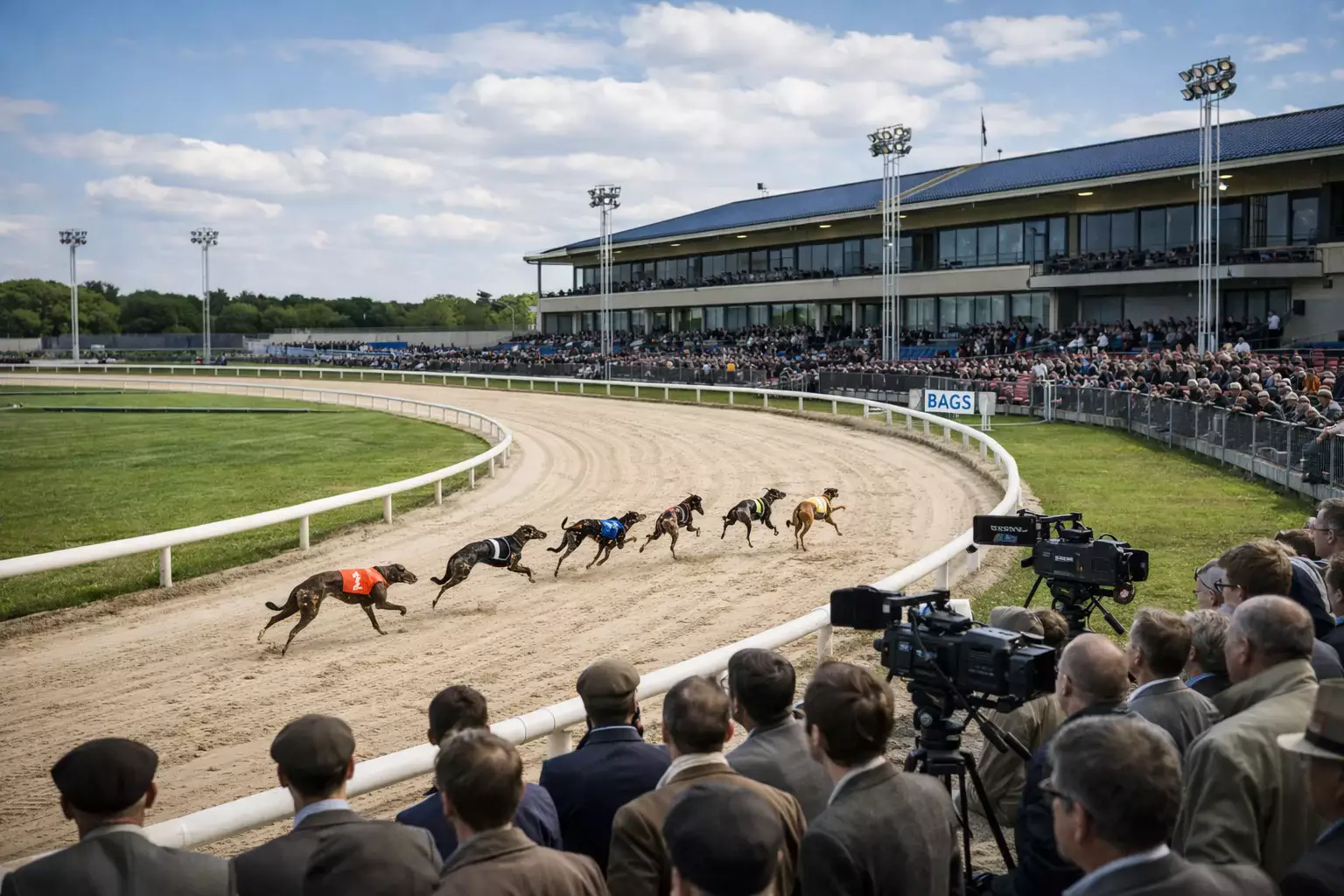
BAGS meetings fill betting shop screens throughout the day, providing greyhound racing content when horse racing cannot supply enough action. The Bookmakers’ Afternoon Greyhound Service contracts with tracks to produce races specifically for betting shop audiences. Racing for the bookies, essentially, though the dogs run regardless of how many punters watch from sofas versus trackside rails.
Understanding BAGS racing reveals how the greyhound industry generates much of its activity. These daytime meetings account for significant portions of overall racing volume, providing tracks with guaranteed revenue and bookmakers with product to sell. The arrangement suits both parties even if the racing itself attracts less attention than evening fixtures.
What Is BAGS?
BAGS stands for Bookmakers’ Afternoon Greyhound Service, though the name has become somewhat anachronistic. Meetings now run throughout the day, from morning slots through to early afternoon, rather than solely in the afternoon hours the original name implied. The function remains consistent: providing betting content for times when alternative racing proves sparse.
The arrangement works through contracts between BAGS organisers and individual tracks. Tracks agree to stage meetings at specified times, producing races according to agreed formats. In return, they receive payments funded by bookmaker contributions. The British Greyhound Racing Fund collected £6.75 million from bookmaker contributions in 2024-25, much of which flows to BAGS operations.
Economic Model
BAGS meetings serve bookmaker needs first. Betting shops want screens showing action that generates wagers. UK greyhound betting turnover reached approximately £1.81 billion in 2024, with a substantial portion generated through BAGS-contracted meetings. Greyhound racing provides reliable content: six dogs, short races, frequent events, clear outcomes. These characteristics suit betting shop environments where customers want quick results and regular opportunities.
Prize money at BAGS meetings comes from pooled contributions rather than track revenue or sponsorship. This typically means lower purses than evening open racing, which in turn affects field quality. Trainers enter dogs according to opportunity and convenience rather than chasing big prizes. The racing serves commercial purposes rather than sporting ambition.
Scheduling Logic
BAGS meetings slot into gaps in the racing calendar. Morning meetings begin when betting shops open, providing early content. Lunchtime sessions bridge between morning and afternoon horse racing. The scheduling ensures something always appears on screens, maintaining customer engagement throughout trading hours.
Multiple tracks may run BAGS meetings simultaneously, spreading coverage across venues. This prevents any single track dominating and provides variety for punters who bet through the day. Coordinated scheduling avoids exact clashes while ensuring continuous coverage.
Racing Character
BAGS racing differs in character from prestige evening meetings. Crowds are minimal, often just trainers and officials. Atmosphere reflects function: workmanlike rather than festive. The dogs race earnestly regardless, but the surrounding context strips away entertainment frills.
For serious form students, BAGS meetings offer advantages. Fewer distractions allow concentrated observation. Reduced public attention may produce market inefficiencies. The functional setting suits those who approach racing analytically rather than socially.
Historical Context
BAGS has operated for decades, evolving as the betting landscape changed. The original afternoon focus reflected betting shop hours and horse racing schedules. Expansion into morning slots followed as bookmakers sought earlier content. The service now spans most of the day, maintaining its role as reliable betting shop product.
Romford BAGS Schedule
Romford hosts BAGS meetings as part of its six meetings per week programme. The daytime sessions complement evening open racing, maintaining track activity throughout the week. This balanced schedule provides regular content for the betting industry while preserving premier evening slots for higher-profile racing.
Typical BAGS slots at Romford include Wednesday and Saturday mornings, beginning around 10:30am. Monday and Thursday afternoons add further daytime fixtures, usually starting near 1:00pm. Exact timings may vary, so checking current schedules before betting remains sensible practice.
Meeting Structure
BAGS meetings at Romford run similar race counts to evening fixtures, typically 12 to 14 races per card. Races span distances from 225 metres to 575 metres or occasionally longer. Grade ranges reflect the track’s typical population, though trainers may rotate dogs between BAGS and evening racing according to their management preferences.
Turnaround between races keeps tight, often around 15 minutes. This rapid pace suits the betting shop audience seeking continuous action. Form students must work efficiently to assess each race before the next begins.
Field Quality Considerations
BAGS fields at Romford generally show slightly lower average quality than equivalent evening grades. Top trainers may reserve their best dogs for better-rewarded evening cards. This does not mean BAGS racing lacks competitive fields; rather, the incentive structure shifts which dogs appear when.
Quality variation creates opportunity. Occasional good dogs appearing in BAGS company may face weaker opposition than their ability warrants. Identifying these scenarios requires knowing which trainers use BAGS meetings strategically and recognising when form suggests class edges.
Check the British Greyhound Racing Fund for details on how bookmaker contributions support BAGS operations.
Betting Coverage
All major UK bookmakers show BAGS racing, reflecting the contracts that fund these meetings. Betting shops display races on screens throughout trading hours. Online platforms stream the same coverage, making BAGS racing accessible wherever customers bet.
Market depth for BAGS racing typically falls below evening meetings. Fewer punters engage with daytime cards, producing thinner markets where individual bets move prices more readily. This cuts both ways: finding value becomes possible, but large stakes may struggle to find liquidity at desired prices.
Streaming Access
Live streaming of BAGS meetings follows the same access rules as evening fixtures. Bookmaker accounts with funded balances or recent betting activity generally qualify for stream access. The technical quality matches evening coverage since the same production infrastructure serves both.
Replay availability extends to BAGS racing. Reviewing morning or afternoon races helps form study even if you could not watch live. Building a picture of how specific dogs ran over recent BAGS meetings informs evening selections where those dogs appear again.
Timing Implications
BAGS racing throughout the day creates opportunities for those who can engage during working hours. The less attention these meetings receive, the more potential value exists for those who pay attention. Markets shaped by smaller betting volumes may reflect less accurate probability assessments.
Professional and semi-professional punters often focus on BAGS racing precisely because recreational attention concentrates on evening meetings. The quieter environment suits systematic approaches that struggle against sharper competition.
Balancing BAGS and evening betting requires managing time and attention. Attempting both exhaustively leads to fatigue without proportionate returns. Most successful punters specialise somewhat, developing expertise in one segment rather than spreading thin across all available racing.
Value Opportunities
BAGS racing presents specific value scenarios that differ from evening patterns. Lower market scrutiny means prices sometimes reflect less information. Dogs returning from layoffs may trial at BAGS meetings before evening campaigns, offering insight to those who watch carefully.
Trainers occasionally place dogs in BAGS races strategically, seeking easier competition or convenient scheduling. Recognising these placements requires following trainer patterns over time. A quality dog dropping into BAGS company from regular evening racing may face simpler tasks than its class warrants.
The key lies in taking BAGS racing as seriously as evening fixtures while acknowledging its different character. Dogs try equally hard regardless of meeting type. Form produced at BAGS meetings deserves equal analytical weight. The commercial purpose behind these meetings affects context but not the racing itself.
Important Information
BAGS schedules and arrangements may change. Always verify current meeting times before betting. Betting on greyhound racing involves financial risk, and stakes should reflect amounts you can afford to lose. Support services including GamCare and BeGambleAware provide assistance if gambling becomes problematic.
This guide is provided for educational purposes only and does not constitute betting advice. No affiliation exists between this publication and BAGS, any track, or any bookmaker.
BAGS Meetings Explained — More on this topic at results romford dogs.
See also Weather Impact on Greyhound Racing.
