 Romford Dogs
  Available in US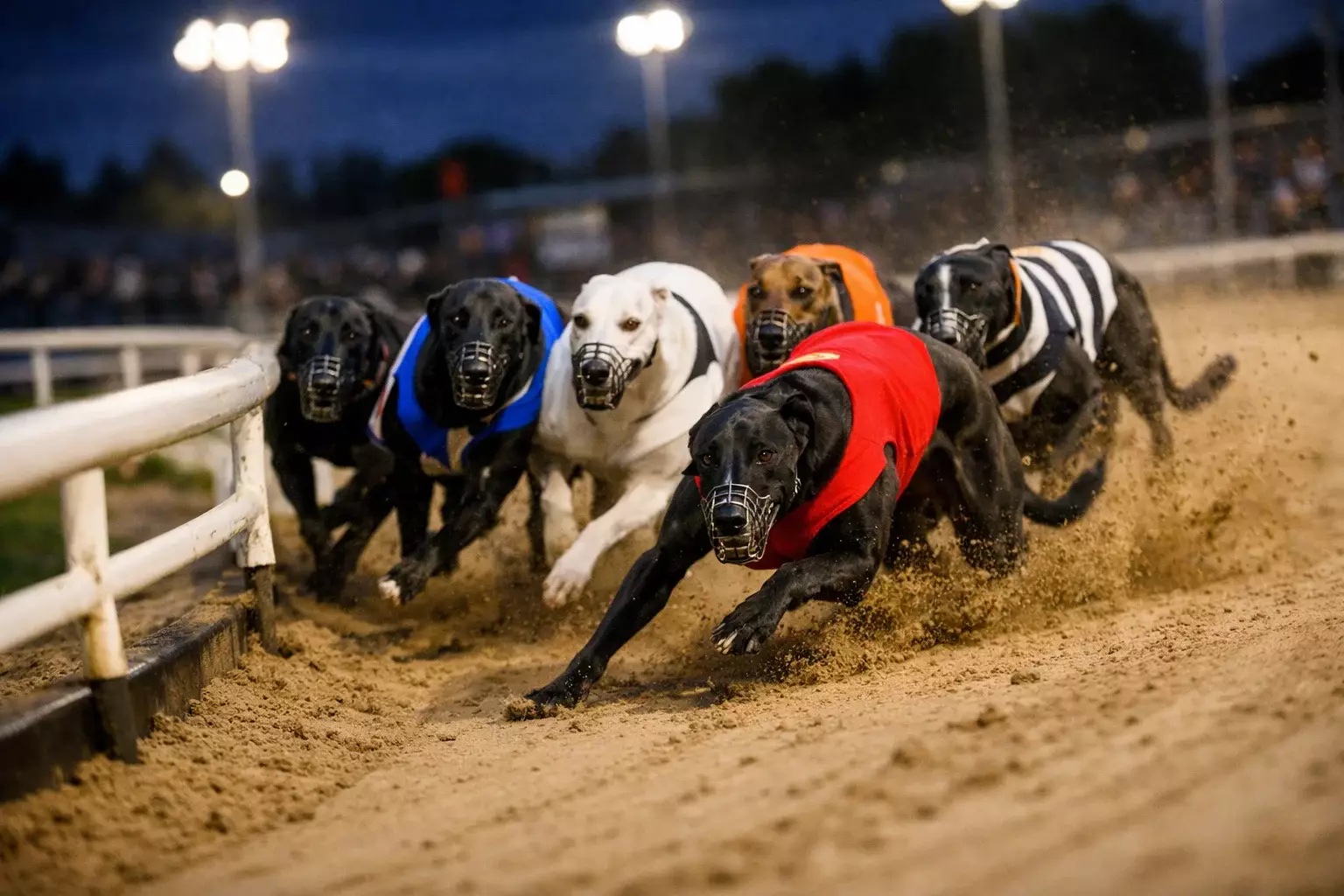
The 400-metre trip represents greyhound racing’s bread-and-butter distance. At Romford and most other UK tracks, the majority of races card over this standard journey. Mastering 400-metre form analysis provides the foundation for understanding greyhound racing more broadly, since the skills transfer readily to shorter and longer distances. The bread-and-butter distance demands attention before anything else.
Four hundred metres at Romford involves two bends on the track’s 350-metre circumference. Dogs break from traps, race to the first bend, navigate both curves, and finish along the home straight. This configuration tests both speed and cornering ability, requiring runners to balance early pace against the need to handle bends efficiently.
400m Characteristics
The 400-metre distance sits at the intersection of speed and stamina. Pure sprinters may find it slightly long; pure stayers may find it slightly short. The dogs that excel over this trip typically combine good early pace with enough endurance to maintain speed through the second bend and finish. This balance makes 400-metre form particularly revealing about overall racing ability.
At Romford, the 350-metre circumference means dogs cover more than a full lap plus additional distance. The track geometry produces two bends of moderate tightness, neither as sharp as smaller circuits nor as sweeping as larger ones. With Romford now London’s only track following Crayford’s January 2025 closure, and only 18 licensed venues remaining across the UK, understanding this course’s 400-metre characteristics becomes essential for anyone following metropolitan greyhound racing. Dogs must handle these curves competently without necessarily being bend specialists.
Race Dynamics
Standard 400-metre races at Romford typically unfold in recognisable patterns. The break from traps determines early positioning. Fast breakers contest the first bend, establishing the order that often persists throughout. Dogs that miss the break face the challenge of making up ground while navigating bends where overtaking proves difficult.
The first bend usually decides more than half the result. Clear leaders through this turn rarely surrender position unless they fade badly. Dogs that round the first bend in mid-pack need exceptional finishing pace to threaten, and even then success depends on finding clear running room.
Time Standards
Winning times over Romford’s 400 metres vary with going conditions, grade, and field quality. Fast times signal good dogs on quick surfaces. Slower times may reflect heavy going, moderate opposition, or tactical races where early pace proved modest. Interpreting times requires context rather than simple comparison.
Track records provide benchmarks but do not indicate typical performances. The best dogs on perfect days set marks that everyday racing rarely approaches. More useful comparisons involve recent running times at the same grade and similar conditions, establishing what constitutes competitive pace for the races you actually encounter.
The Role of Fitness
Over 400 metres, fitness shows clearly. Dogs returning from layoffs may lack the condition to sustain effort through both bends. Recent runners in regular work demonstrate sharpness that occasional racers cannot match. Check how recently each dog ran when assessing their readiness for competitive 400-metre trips.
Distance Comparison
Form over 400 metres often translates reasonably to other standard distances. A dog competitive over 400 metres can usually handle 460 or 480 metres at other tracks without major adjustment. The skills required overlap significantly: early pace, bend negotiation, and sustained effort.
Sprint form over 225 metres translates less directly. Pure speed specialists sometimes struggle to maintain pace over the longer journey. Equally, 400-metre dogs dropping to sprints may lack the explosive acceleration that short distances demand. Treat cross-distance form with appropriate caution.
Trap Analysis at 400m
Trap draw influences 400-metre results at Romford, though less dramatically than over sprint distances. Inside traps enjoy slightly shorter runs to the first bend, while outside traps face longer journeys and more potential for crowding. These biases produce measurable differences in win rates across trap positions.
Historical statistics show trap one and trap two producing above-average win rates at 400 metres. The rail advantage matters, but not overwhelmingly. Outside traps can win with quality dogs showing sufficient early pace to establish position before the bend.
Pace Angles
The start configuration affects how early pace translates to position. Dogs in inside traps need to break sharply to exploit their positional advantage. Dogs in outside traps must show enough speed to avoid being squeezed against the rail or forced to race wide.
When multiple fast breakers draw inside traps, crowding often results. Two dogs from traps one and two converging on the same rail position can interfere with each other, opening opportunities for runners in middle traps to slip through. Reading the pace map helps anticipate these scenarios.
Bend Positioning
Position entering the first bend largely determines position exiting it. Dogs on the rail travel shorter distances and maintain better momentum. Dogs racing wide cover extra ground and often lose relative position despite maintaining similar speed. The geometry punishes wide runners more severely than intuition might suggest.
Second bend dynamics matter less since the field has typically separated by then. Leaders hold the rail automatically. Chasers must decide whether to commit outside or wait for gaps that may not materialise. Most races over 400 metres are effectively decided before the second bend begins.
Check Romford’s official schedule for current racing fixtures where these dynamics play out.
Form Reading Tips
Reading form for 400-metre races starts with recent finishing positions but extends much further. Times matter, but so does how those times were achieved. A dog that led throughout and won easing down ran differently from one that closed from behind to win on the line. Both show winning form; both present different profiles for future races.
Sectional times, where available, reveal running styles. Fast first-bend times indicate early pace. Strong finishing sectionals suggest late speed. Combining these details with finishing positions builds fuller pictures than either data source provides alone.
Grade Context
Four hundred metres hosts races across all grades at Romford. Winning times and competitive standards vary enormously between A1 and A7 company. Across UK tracks, approximately 355,000 races are run annually, with 400-metre trips comprising the largest share of that total. Always contextualise form within its grade before drawing conclusions about ability.
Dogs stepping up grades after 400-metre success face stiffer early pace. The speed that allowed leading at A5 may not suffice at A3. Conversely, quality dogs dropping in grade may find easier opportunities to establish position and control races from the front.
Course Form
Track-specific form carries extra weight. A dog that has won over Romford’s 400 metres knows the bends, understands the running surface, and has demonstrated ability to handle local conditions. This experience provides advantages over runners new to the venue, even if their overall form looks stronger.
Trainer patterns also reveal useful information. Some kennels excel over 400 metres while struggling at other distances. Others show opposite tendencies. Tracking trainer performance by distance identifies angles that pure dog form might miss.
Practical Application
Before each 400-metre race at Romford, work through a systematic assessment. Check recent form at this distance specifically. Note trap draws and identify likely pace scenarios. Consider grade movements and their implications. Review course form and trainer records. This structured approach catches details that casual observation misses.
Compare your assessment to market prices. Where your analysis suggests a runner deserves shorter odds than offered, potential value exists. Where your reading suggests longer odds are warranted, avoiding the selection makes sense. The gap between assessment and market provides the basis for betting decisions at any distance, and 400-metre races offer the most frequent opportunities to apply this approach.
Important Information
Race outcomes depend on multiple factors beyond distance-specific analysis. Betting on greyhound racing involves financial risk, and stakes should reflect amounts you can afford to lose. Support services including GamCare and BeGambleAware provide assistance if gambling becomes problematic.
This guide is provided for educational purposes only and does not constitute betting advice. No affiliation exists between this publication and Romford Stadium or any racing organisation.
Romford 400m Races — More on this topic at results romford dogs.
See also BAGS Meetings Explained.
