 Romford Dogs
  Available in US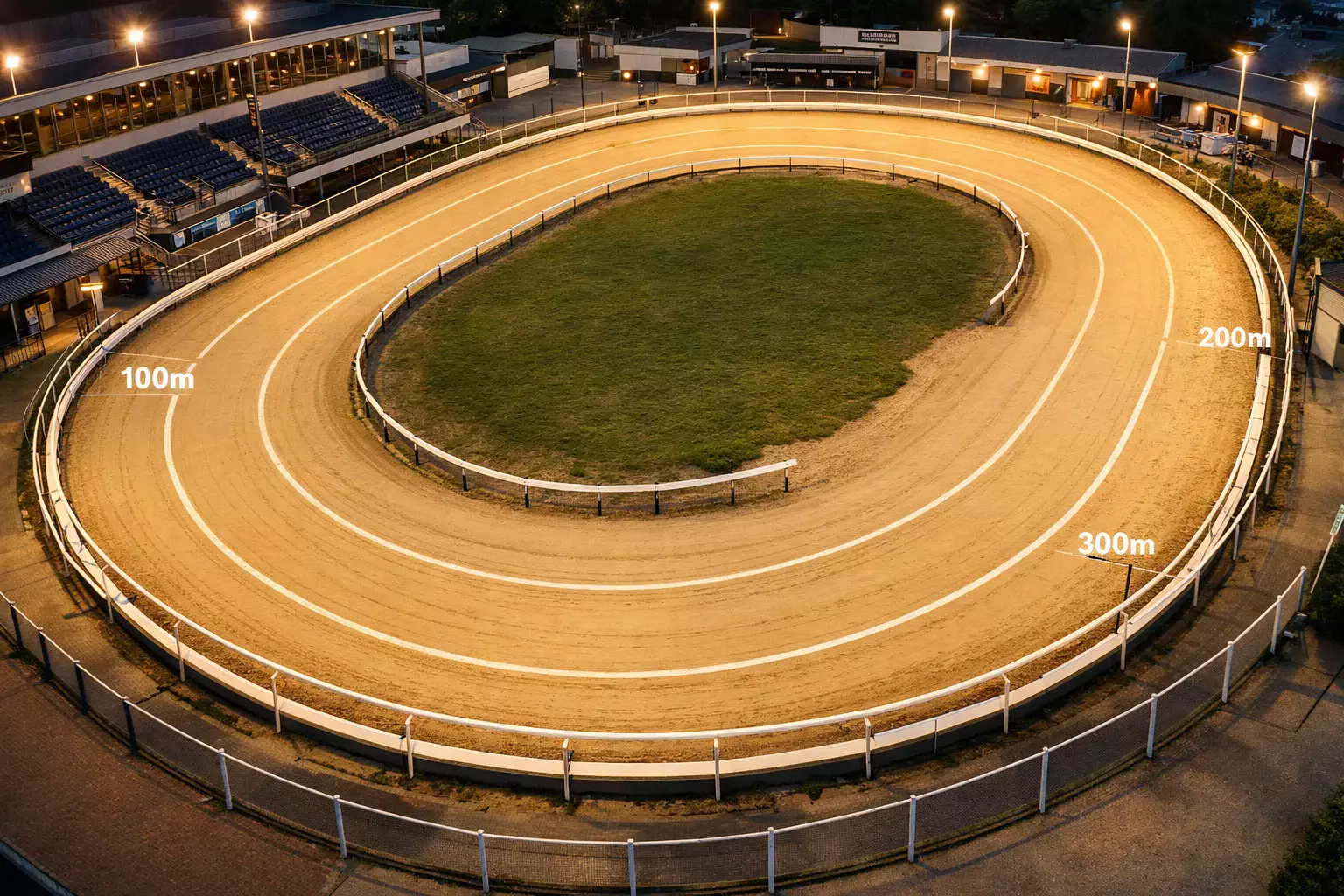
Romford track records reveal what dogs and distances can achieve on this particular circuit. Every metre matters when assessing form, and understanding the track’s specifications helps translate times from one venue to another. Since January 2025, Romford stands as Greater London’s sole licensed greyhound track following Crayford’s closure—making familiarity with its characteristics essential for anyone following metropolitan racing.
The stadium operates five racing distances across its 350-metre circumference. From the 225-metre sprint around a single bend to the 925-metre marathon covering nearly three laps, each distance tests different attributes. Sprint specialists often struggle over middle distances; marathon dogs typically lack the explosive early pace to win short races. Track records anchor benchmarks against which current form can be measured.
“UK greyhound racing is certainly better placed to enter a second centenary of sporting endeavours in the next couple of years, but we can never be complacent in terms of maintaining our sport’s social licence within society.” — Mark Bird, Chief Executive, GBGB
This guide breaks down each distance category, covering typical running times, tactical considerations, and how track configuration affects race dynamics. We examine start positions, bend angles, and surface characteristics that shape performances at Romford specifically. Whether handicapping races or simply appreciating what track records represent, the following sections provide the technical foundation for understanding this venue.
Track Specifications
Romford Greyhound Stadium operates a 350-metre circumference track with a sand racing surface. The stadium hosts six racing meetings weekly: Friday and Saturday evenings, Wednesday and Saturday mornings, plus two daytime sessions on Monday and Thursday. This schedule makes Romford one of Britain’s busiest GBGB-licensed venues by fixture count.
Circuit Dimensions
The 350-metre lap places Romford among medium-sized UK circuits. Smaller tracks like Sunderland (256 metres) produce faster bend sequences but less straight-line running. Larger venues like Towcester (463 metres before its closure) offered longer straights favouring sustained speed over agility. Romford’s dimensions create balanced racing where both early pace and finishing strength matter, without either attribute completely dominating.
Bend angles at Romford require dogs to adjust racing lines without the tight turns of smaller circuits. The transition from straight to bend and bend to straight tests a dog’s ability to maintain momentum through directional change. Dogs that rail effectively—running tight to the inside—gain ground on rivals running wider lines, a tactical element that influences trap draw importance at different distances.
Surface Composition
Sand surfaces respond to weather conditions differently than other materials. Rain can compact sand, creating faster times as dogs gain better purchase. Extremely dry conditions may produce looser surfaces where power matters more than speed. GBGB works with the Sports Turf Research Institute for quarterly track assessments at licensed venues, though specific Romford surface composition details aren’t publicly documented.
Surface consistency affects injury profiles. Well-maintained sand provides adequate cushioning for paw strike impact while offering grip for acceleration and bend negotiation. Poor surface conditions—whether too hard, too soft, or unevenly compacted—increase stress on joints and soft tissues. Track maintenance standards form part of GBGB’s licensing requirements.
Starting Boxes
All Romford races use standard six-trap starting boxes. Trap numbering runs one through six from the inside rail outward. At sprint and some middle distances, starts occur on bends where inside traps face immediate proximity to the first corner. Longer distances typically begin on straights, giving all traps a more even run to the opening bend. Start position significantly influences race dynamics, particularly at sprint distances where early positioning often proves decisive.
Comparison to Other UK Tracks
Romford’s 350-metre circumference sits mid-range among the 18 GBGB-licensed tracks remaining after 2025 closures. Doncaster runs 460 metres; Crayford ran 378 metres before closing. Times set at Romford don’t directly translate to other venues without adjustments for lap length, bend tightness, and surface differences. Form assessments crossing venues must account for these variations rather than treating times as absolute measures.
225 Metres: The Sprint
The 225-metre dash covers just over half a lap, starting on the bend and finishing on the home straight. This configuration makes trap draw critical: inside traps face shorter runs to the bend apex, while outside traps must cross traffic or accept wider racing lines. Pure speed matters less than break speed and first-bend positioning.
Race Dynamics
Sprint races typically resolve before the home straight begins. A dog leading through the bend often maintains position to the line simply by avoiding interference. Coming from behind requires either rivals to fold completely or sufficient pace advantage to overcome positional deficit in under 100 metres of straight running. The maths favour front-runners heavily.
Trap 1 and Trap 6 represent the extremes. Trap 1 hugs the rail but can face crowding if neighbours break sharply toward the inside. Trap 6 runs wider naturally but has clear early running if breaking well. Middle traps (3 and 4) often encounter the most traffic, squeezed between inside and outside movers. Historical trap statistics for 225m races show bias patterns reflecting these dynamics, though specific Romford data isn’t publicly aggregated.
Time Standards
Quality sprint times at 225 metres fall below 14 seconds, with exceptional runs dipping toward 13.5 seconds depending on conditions. Track records represent perfect circumstances: ideal going, no interference, and a greyhound performing at absolute peak. Most competitive races produce times in the 14.0 to 14.5 second range, with anything above 15 seconds suggesting either interference or sub-standard competition.
Form Assessment
Sprint form translates poorly to middle distances. A dog winning 225-metre races by breaking fast and leading throughout hasn’t demonstrated the sustained pace needed over 400 or 575 metres. Conversely, a good 400-metre dog might lack the explosive acceleration for sprint success. Specialist sprinters exist—dogs bred and trained specifically for short-distance work—though most greyhounds race across a range of distances during their careers.
When assessing sprint form, prioritise box breaks and first-bend runs over overall times. A 14.2 second run from a clean break tells different stories than a 14.2 following early crowding. Racecard comments noting “slow away” or “bumped first bend” indicate circumstances that times alone don’t capture.
400 Metres: The Standard
Four hundred metres represents greyhound racing’s bread-and-butter distance, covering approximately one lap plus a short run-in. Most races at Romford and other UK tracks use this distance, making 400-metre form the primary basis for grading assessments and market pricing. Dogs that can’t compete over 400 metres rarely sustain racing careers regardless of specialist abilities at other distances.
Race Structure
The 400-metre start typically occurs on the home straight with boxes positioned for a run toward the first bend. This configuration gives all traps reasonable sight of the opening corner, though inside traps still hold positional advantage once the bend arrives. The race then continues through the back straight, around the far bend, and down the home straight to finish.
Two bend negotiations test dogs differently than the single bend of sprint racing. A dog that leads through the first bend faces a second navigational challenge while potentially tiring. Closers have opportunities to make ground on both bends if front-runners fade or run wide. Race tactics become more complex than pure sprint scenarios.
Time Standards
Competitive 400-metre times cluster around 24 to 25 seconds, with graded racing performance typically ranging from 23.5 seconds for open-class dogs through 26+ seconds for lower grades. Track records at major venues sit in the low 23-second range, representing exceptional dogs running under optimal conditions. A dog consistently running sub-24 seconds at Romford competes at the sharp end of its grade.
Sectional Analysis
Standard 400-metre races produce sectional times: split measurements at specific points on the circuit. Early pace (time to the first bend) indicates break quality and initial speed. Late pace (final section to the line) reveals finishing strength or fade. Dogs with strong early sectionals but poor late sections are front-runners that fade; the reverse pattern indicates closers.
Sectional time comparison matters more than overall time comparison when races involve different run shapes. A 24.5 second run produced by quick-early, slow-late differs fundamentally from 24.5 achieved through slow-early, quick-late. The first dog benefits from inside draws and interference-free runs; the second dog handles adversity better but needs racing room to close.
Grade Movement
Performance over 400 metres drives grading decisions. A dog consistently beating its grade gets promoted to faster company; one finishing behind expectations faces relegation to slower grades. The GBGB grading structure (A1 through A10, with variations) reflects 400-metre times and finishing positions more directly than any other distance. Understanding a dog’s grade relative to its 400-metre ability provides the foundation for all form assessment.
575 Metres: Middle Distance
At 575 metres, races cover approximately one and two-thirds laps, introducing stamina demands absent from shorter trips. Dogs must maintain pace through three bends and extended straight running. The distance separates genuine all-round greyhounds from specialists limited to sprint or marathon work.
Tactical Complexity
Middle-distance racing permits more tactical variation than sprints. Front-runners can dictate pace while conserving energy for the finish. Midfield runners track leaders without burning reserves on the early lead. Closers sit at the rear before producing finishing bursts through gaps that develop as tired dogs shift lines.
Start position matters less than at 225 metres because three bends allow multiple repositioning opportunities. A dog blocked at the first bend can recover by the second or third. This forgiveness of poor early position means 575-metre form assessment should weight overall ability more heavily than trap draw luck.
Time Standards
Quality 575-metre times fall between 35 and 37 seconds, with graded racing spanning from around 34.5 seconds at the top through 38+ seconds in lower grades. The additional distance amplifies class differences: a dog half a second slower per 100 metres loses by more than three lengths over the full trip. Margins of victory tend to be larger at middle distances than over 400 metres.
Stamina Requirements
Breeding influences middle-distance suitability. Certain sire lines produce dogs with natural stamina; others throw predominantly sprinting types. A dog’s pedigree offers clues about distance aptitude before race form confirms or contradicts expectations. Dogs stepping up from 400 to 575 metres for the first time warrant caution—not all successful standard-distance runners handle the extra yardage.
Running style also predicts distance suitability. Dogs that finish their 400-metre races strongly, closing on front-runners rather than holding position, often improve at 575 metres where their stamina becomes advantageous. Dogs that lead throughout 400-metre races but fade slightly to the line may struggle when asked to maintain that effort over additional ground.
Race Planning
Fewer 575-metre races appear on typical cards than 400-metre events. Tracks schedule middle-distance contests to cater to specifically graded dogs and to offer variety within meeting programmes. For bettors, the smaller sample size of 575-metre racing means form assessment draws on fewer recent runs, increasing uncertainty relative to standard-distance handicapping.
750 Metres: The Marathon
Seven hundred fifty metres covers two full laps plus run-in, demanding sustained effort that separates genuine stayers from standard-distance dogs. Marathon races appear less frequently on cards than shorter trips, creating a specialist niche for dogs bred and trained specifically for staying work.
Pacing Strategies
Marathon racing rewards intelligent pacing over raw speed. Dogs that blast to early leads often fade dramatically through the second lap, caught by rivals who conserved energy during the opening half. Successful marathon runners typically settle in midfield early, maintaining contact with the pace before producing sustained drives through the final bend and home straight.
Watching 750-metre races reveals distinct phases: the initial dash to the first bend, a settling period through the first lap, and then the extended battle through the second lap as stamina reserves deplete. Dogs that accelerate during the second lap while others slow demonstrate true staying power—a quality that breeding influences but training and racing experience develop.
Time Standards
Marathon times typically fall between 46 and 49 seconds, though variation within grades can be substantial. The extended distance magnifies small pace differences into large finishing margins. A dog losing one-tenth of a second per 100 metres finishes more than five lengths behind over 750 metres—enough to turn a competitive run into an also-ran performance.
Breeding Influences
Certain bloodlines produce marathon specialists. Sire statistics reveal lines that throw consistent stayers versus those producing predominantly sprinters or middle-distance types. While any greyhound can theoretically run 750 metres, genuine competitiveness at staying distances correlates with pedigree indicators that experienced punters track across racing populations.
The small pool of marathon specialists means the same dogs often face each other repeatedly. Form cycles become more predictable than in larger standard-distance populations, but also more dependent on recent well-being. A stayer returning from injury or layoff may take several runs to regain marathon fitness, even if appearing physically ready for shorter trips.
Market Dynamics
Marathon races attract specialist bettors who follow staying form closely. The smaller participant pool creates knowledge advantages for those who track the distance specifically. General punters often apply standard-distance logic inappropriately, overvaluing early speed while underestimating stamina pedigrees. These inefficiencies occasionally produce value for marathon specialists.
925 Metres: The Extreme
At 925 metres, Romford’s longest distance covers nearly three full laps. These extreme-distance races appear rarely, reserved for specialist stayers and typically run as feature events rather than standard graded contests. The distance pushes greyhounds to the limits of their stamina, producing racing where attrition determines finishing order as much as class.
Physical Demands
Running 925 metres at race pace requires cardiovascular capacity, muscle endurance, and mental determination beyond other distances. Dogs may tire substantially through the second lap but must maintain effort through a third. The physiological demands suit a narrow subset of the greyhound population—dogs bred specifically for extreme staying work.
Training for 925-metre races differs from preparation for shorter distances. Stamina building through extended gallops, careful fitness management to prevent overtraining, and racing schedules that allow adequate recovery between efforts all factor into extreme-distance campaigns. Trainers who specialise in stayers understand these requirements; generalist trainers may struggle to optimise dogs for the longest trips.
Race Patterns
Extreme-distance races unfold slowly by greyhound standards. The first lap often resembles tactical shadow-boxing as runners avoid expending energy prematurely. Tempo increases through the second lap as stronger dogs begin asserting. The third lap separates the genuine extreme stayers from dogs that merely handle 750 metres—the additional 175 metres exposes any stamina limitations mercilessly.
Closing ability matters more at 925 metres than any other distance. Dogs that finish strongly at 750 metres become formidable extreme-stayers because their stamina advantage compounds over the extra ground. Front-runners face the longest possible exposure to pressure from closers, making pace-making tactics particularly risky at this distance.
Rarity and Specialisation
The scarcity of 925-metre races limits form samples. A dog might run only a handful of extreme-distance contests annually, compared to weekly or fortnightly 400-metre appearances. This infrequency makes form assessment challenging but also creates information asymmetries—punters who follow extreme-distance racing closely may spot value that casual observers miss.
Record Implications
Track records at 925 metres represent exceptional staying performances from greyhounds at peak marathon fitness. Times typically fall between 58 and 62 seconds, though the distance’s rarity means records face fewer challenges than at standard distances. When extreme-distance records fall, they often stand for extended periods simply because fewer dogs contest the distance.
Course Characteristics
Beyond raw distances, Romford’s specific course features shape race outcomes. Surface conditions, rail positioning, bend dynamics, and run-in configuration all influence how dogs perform relative to their underlying ability.
Surface Conditions
Sand tracks respond to weather throughout a meeting. Morning rain can produce faster going as surfaces compact; afternoon drying may loosen the top layer. Dogs that handle variable going—adapting stride patterns to different surface textures—prove more consistent across conditions. Specialists that require firm or soft going face narrower windows of optimal performance.
Track maintenance crews work between races to maintain surface consistency. Harrowing redistributes sand; watering adjusts moisture levels. Despite these efforts, going can change noticeably between early and late races on the same card, particularly during weather transitions. Going reports published before meetings provide baseline guidance but may not capture within-meeting variation.
Rail Position
The inside rail provides the shortest path around bends. Dogs that race tightly against the rail—”railers”—save ground on rivals running wider lines. This geometry particularly benefits inside trap draws at bend starts, where rail position is immediately accessible. Middle and outside traps must either push across traffic to reach the rail or accept wider racing lines that add distance covered.
Rail position carries risks alongside benefits. Railers can become trapped behind fading runners with no room to pass. Wide runners can sweep around traffic but cover extra ground doing so. The tactical trade-off between position and distance defines many races, with outcomes depending on which strategy better suits the specific race circumstances.
First Bend Dynamics
The first bend at Romford witnesses most race-affecting incidents. Six dogs converging from starting boxes toward a narrowing bend creates crowding potential. Dogs bumped or checked at the first bend lose lengths that may prove irrecoverable at shorter distances. Form analysts weight first-bend trouble heavily when assessing run quality rather than simply reading finishing positions.
Track design influences first-bend safety. The distance from boxes to the bend, bend camber, and rail positioning all affect how cleanly dogs negotiate the opening corner. At Romford, the 350-metre lap creates moderate first-bend approaches at standard distances—longer than tight circuits but shorter than expansive venues with lengthy runs to the first corner.
Home Straight and Finish
The run-in from the final bend to the finishing line determines whether closers can overhaul leaders. Longer run-ins favour dogs that finish strongly; shorter run-ins protect front-runners. Romford’s configuration suits versatile dogs rather than extreme types at either end of the speed-stamina spectrum, reflecting the circuit’s mid-sized dimensions.
Finish line camera angles and timing equipment record official results and times. Margins listed in finishing order derive from these systems, providing the precise data that informs grading decisions and form assessment. Understanding that these measurements underpin the numbers helps interpret their significance beyond simple faster-equals-better assumptions.
Disclaimer
Track specifications, distances, and time standards described here reflect publicly available information about Romford Greyhound Stadium. We are not affiliated with the stadium, its operators, or the Greyhound Board of Great Britain. Track records and times may change; readers should verify current figures through official sources before relying on specific data.
Betting on greyhound racing involves financial risk. Track knowledge improves handicapping but does not guarantee profitable outcomes. Past performance of dogs at specific distances does not reliably predict future results. Please gamble responsibly and within your means.
For those seeking official information about Romford racing, the stadium’s management and Greyhound Data provide current racecards, results, and statistical resources. The GBGB website offers regulatory information applicable to all licensed UK tracks including Romford.
Romford Track Records & Race Distances — More on this topic at results romford dogs.
See also Romford Dogs Schedule 2026.
