 Romford Dogs
  Available in US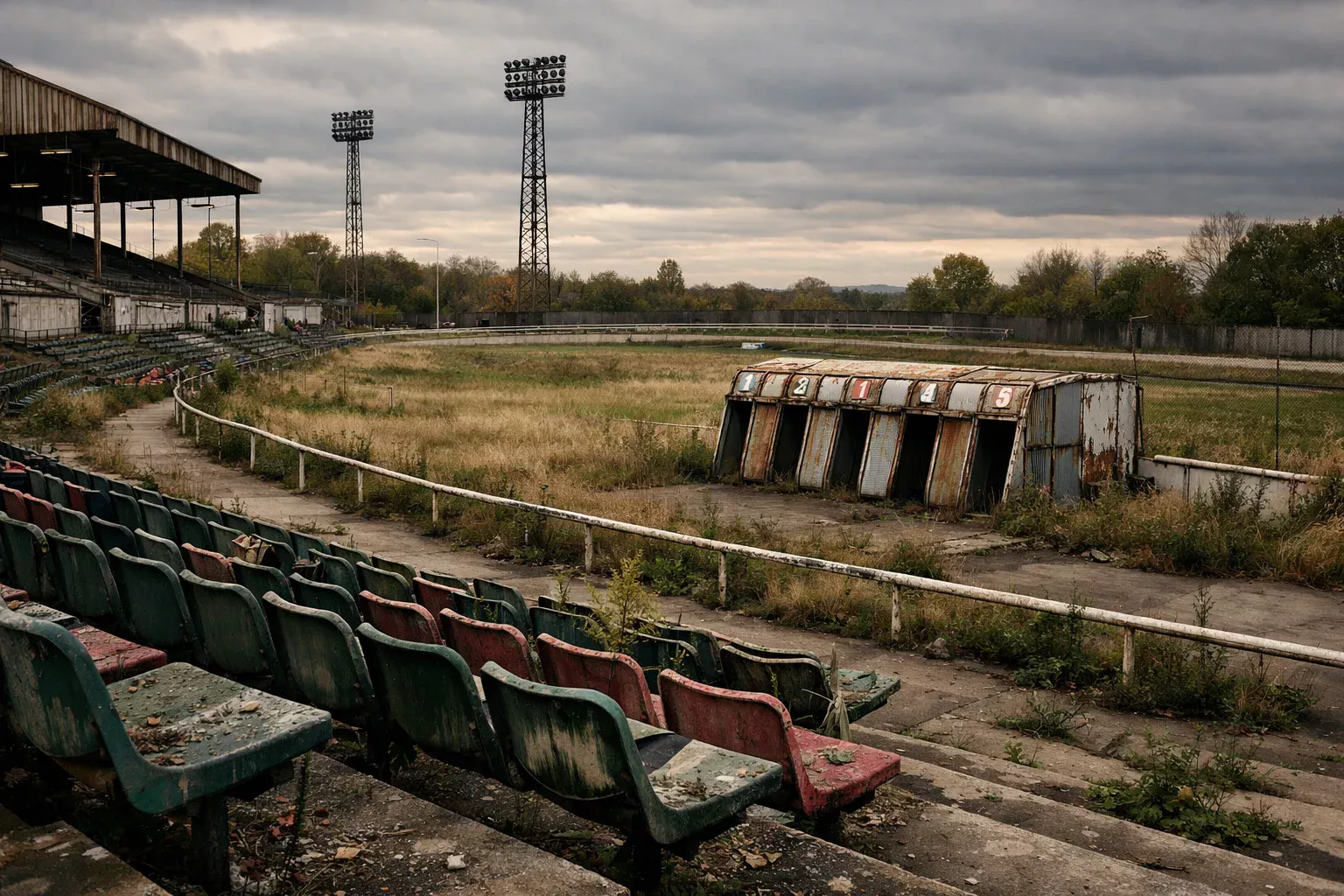
The shrinking circuit tells its own story. UK greyhound racing operates on a fraction of the infrastructure it once commanded. Tracks that hosted packed crowds for generations now exist only in memory, their sites redeveloped for housing, retail, or simply left vacant. Understanding why venues keep disappearing helps contextualise the sport’s current state and its uncertain trajectory.
The numbers are stark. In the 1940s, Britain boasted 77 licensed greyhound tracks alongside 200 or more independent venues. By January 2025, just 18 GBGB-licensed tracks remained operational. Crayford and Swindon joined the closure list in the preceding months, continuing a decades-long pattern of contraction that shows no sign of reversing.
Romford now stands as London’s only greyhound track, a status acquired by default when Crayford closed. This concentration of the capital’s greyhound racing at a single venue underscores how dramatically the landscape has shifted. The factors driving these closures, economic pressures, land values, and changing entertainment preferences, operate across the entire sport rather than targeting individual venues.
For those who follow greyhound racing at Romford or elsewhere, understanding the closure phenomenon provides context for a sport that can no longer take its physical infrastructure for granted. Every track that closes reduces the circuit, concentrates racing at fewer venues, and reminds participants that continuation requires more than enthusiasm.
Closure History
Greyhound racing’s decline in Britain tracks larger social and economic shifts. The immediate post-war period represented the sport’s peak, with working-class communities embracing accessible evening entertainment before television dominated leisure time. Attendance figures that once rivalled football gradually eroded as competing attractions multiplied and suburban lifestyles reduced the appeal of urban evening outings.
The acceleration of closures from the 1960s onward reflected property market dynamics as much as declining attendance. Greyhound stadiums occupied substantial urban land, often in areas experiencing residential or commercial development pressure. Property values rose while racing revenues stagnated or fell, making sale for redevelopment increasingly attractive to stadium owners.
Notable Closures
Wimbledon Stadium’s 2017 closure removed one of Britain’s most famous greyhound venues, ending 89 years of racing on a site subsequently approved for football development. White City, which hosted the 1927 inaugural English Greyhound Derby, closed in 1984 despite its historical significance. Walthamstow, after 75 years of operation, shut in 2008 despite community campaigns for preservation.
Each closure followed recognisable patterns: declining attendance made racing economically marginal, property development offered alternative revenue streams, and insufficient legal protection allowed conversion to other uses. Heritage status rarely extended to greyhound stadiums the way it protected other sporting venues, leaving tracks vulnerable to pure market logic.
Recent Losses
Crayford’s January 2025 closure eliminated Greater London’s second-to-last track, concentrating the capital’s greyhound racing entirely at Romford. Swindon closed around the same period, reducing the national total to 18 venues. These closures occurred despite GBGB welfare improvements that might have been expected to secure the sport’s social licence and operational continuity.
The recent closure rate suggests the contraction has not ended. Remaining tracks face the same economic pressures that claimed their predecessors, with no structural change in the industry’s financial position to suggest immunity from future closures. The pattern that reduced 77 tracks to 18 over several decades shows no sign of reaching a natural floor where survivors can feel secure.
Regional distribution of closures has left some areas without convenient access to licensed greyhound racing. Where multiple tracks once served metropolitan regions, single venues now cover larger catchment areas or no tracks exist at all. This geographic contraction limits participation opportunities for trainers, owners, and spectators who cannot easily travel to distant surviving tracks.
Economic Factors
Land values represent the most direct pressure on track survival. Greyhound stadiums occupy large footprints in locations that have often transitioned from industrial or marginal urban areas to desirable development sites. A track generating modest operating profits sits on land worth millions for alternative uses. The gap between racing revenue and land value widens as property prices rise and betting volumes stagnate.
According to industry analysis, the bookmaker voluntary levy that funds GBGB operations has declined 67% in real terms since 2008/09. This erosion undermines the financial foundation supporting track maintenance, prize money, and welfare programmes. Tracks operating on tight margins find reduced levy income directly threatening to their viability.
Revenue Challenges
On-course betting and attendance have declined as punters increasingly bet remotely. The trackside experience that once drove greyhound racing’s appeal now competes with convenient digital alternatives that require no travel. Tracks earn less from on-course spending while bookmakers profit from remote wagering that contributes proportionally less to industry coffers.
Hospitality and event income partially offset racing revenue declines at some venues. Corporate events, private functions, and themed entertainment evenings generate revenue streams independent of actual racing attendance. But these activities face their own competition and rarely provide sufficient income to transform underlying economics.
Operating Costs
Track maintenance, regulatory compliance, staffing, and welfare requirements create fixed costs that do not scale down with attendance. A track hosting 500 spectators per meeting faces similar operational demands to one hosting 5,000. As attendance drops, per-customer costs rise, squeezing margins that were never generous to begin with.
GBGB licensing requirements ensure welfare standards but impose compliance costs on operators. These requirements are appropriate and necessary, but they represent expenses that tracks must cover regardless of revenue performance. The combination of declining income and stable costs creates the financial pressure that precipitates closures.
Future Outlook
No obvious mechanism exists to reverse the closure trend. Land values will likely continue rising in areas where greyhound tracks operate. Betting revenues show no signs of returning to historical levels. Alternative entertainment options multiply while greyhound racing’s audience ages without proportional replacement by younger generations.
Remaining tracks vary in their vulnerability. Some occupy land with less development potential or benefit from ownership structures that prioritise racing continuity over profit maximisation. Others operate on borrowed time, with closure a matter of when rather than if. Identifying which tracks face immediate risk requires knowledge of individual circumstances that outsiders cannot easily assess.
Industry Responses
GBGB has advocated for statutory levies that would replace voluntary bookmaker contributions with legally mandated payments. Statutory funding would provide more reliable income and potentially higher total receipts, strengthening the financial position of the sport as a whole. Whether such legislation passes depends on political will that greyhound racing alone cannot command.
Individual tracks explore diversification, shared ownership models, and community engagement initiatives to build support for continued operation. These efforts occasionally succeed in extending track lifespans but cannot address the fundamental economics that drive closure decisions. Without structural change to industry financing, diversification delays rather than prevents eventual outcomes.
What Remains
The 18 remaining tracks represent a circuit that can still deliver competitive greyhound racing across Britain. Romford, as London’s sole survivor, carries particular significance for the sport’s visibility in the capital. Whether this contracted circuit represents a sustainable base or a waystation toward further contraction remains uncertain. The sport has adapted to previous losses and continues operating, but each closure reduces the infrastructure that makes continuation possible.
Geographic distribution of remaining tracks creates coverage gaps. Some regions retain reasonable access to licensed racing while others lost their local tracks years ago. This uneven distribution affects attendance, as potential racegoers face longer journeys to reach remaining venues. The concentration of surviving tracks creates loyal local audiences but limits the sport’s reach across the country as a whole.
Betting remains available regardless of track location through digital channels, but the connection between place and sport weakens when physical venues disappear. Something intangible departs with each closure, a link to community history and tradition that online betting cannot replicate. The tracks that remain carry the weight of representing not just themselves but a sporting culture that their closed counterparts can no longer embody.
Important Notice
This article provides information about UK greyhound track closures for educational purposes. Track operational status changes; verify current status through official sources. Historical statistics reflect published data and may be subject to different methodologies across sources. This content does not express a position on industry policy or the merits of greyhound racing. Information about specific tracks reflects publicly available reporting at the time of writing.
UK Greyhound Track Closures — More on this topic at results romford dogs.
See also Greyhound Racing Terminology.
