 Romford Dogs
  Available in US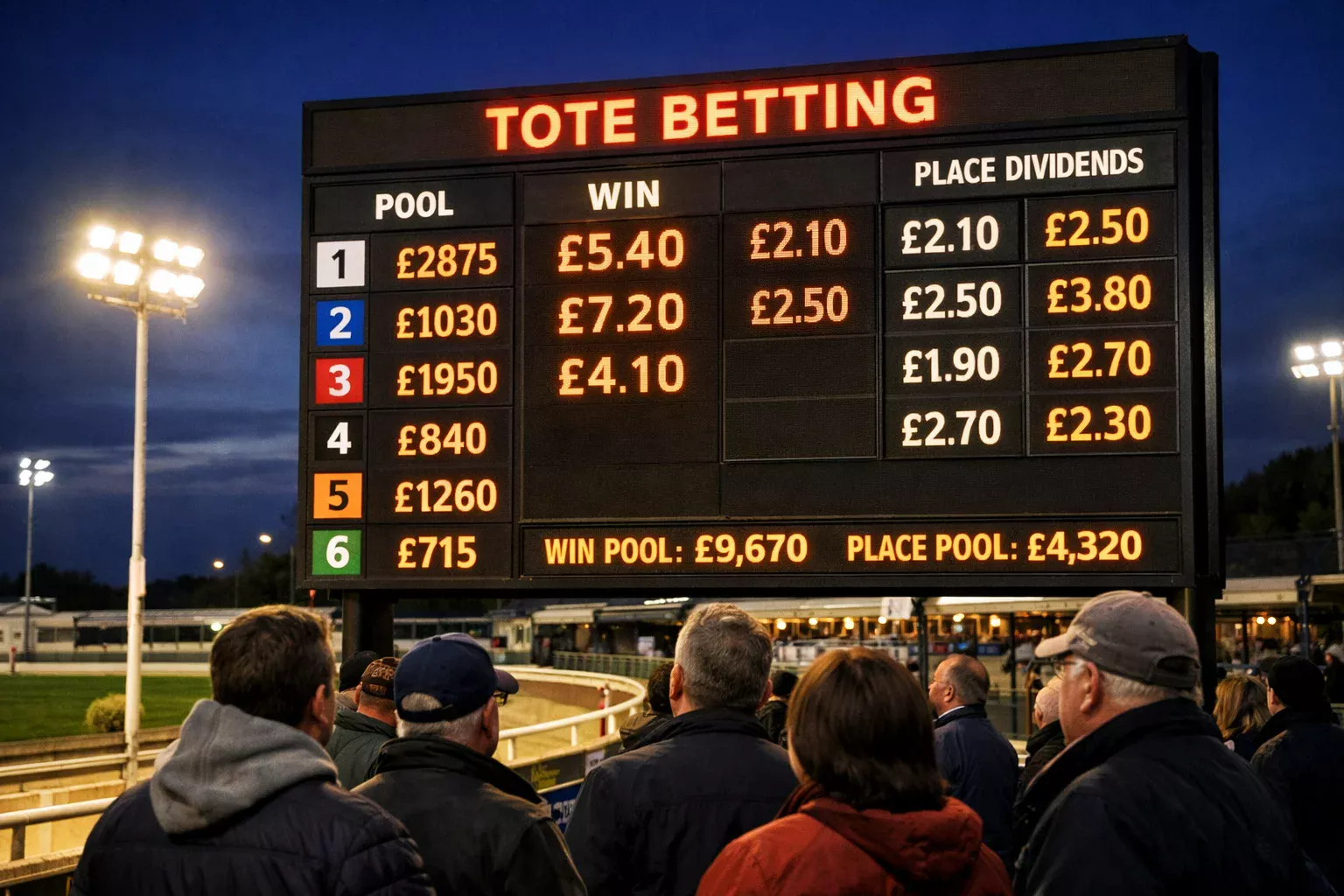
Pool your chances. Tote betting operates on fundamentally different principles than fixed-odds wagering with traditional bookmakers. Rather than accepting a set price when placing your bet, you contribute to a shared pool. After the race, that pool divides among winning tickets, producing dividends determined by how much money backed each outcome. This parimutuel system, borrowed from horse racing and applied to greyhounds, offers distinct advantages and limitations worth understanding.
The UK greyhound racing industry handles substantial wagering volumes. According to industry analysis, approximately £1.81 billion was wagered on UK greyhound racing in 2024. A portion of this flows through tote pools rather than fixed-odds books, contributing to an ecosystem where pool betting coexists with traditional bookmaker markets.
Understanding how tote pools work, the different pool types available, and when pool betting might suit your approach helps make informed choices about where to place your money. The mechanics differ from bookmaker betting, but the underlying goal remains the same: backing winners profitably.
How Tote Pools Work
Every tote bet contributes to a common pool for that particular market. Win bets join the win pool; place bets join the place pool; forecast bets join the forecast pool. Each pool operates independently, with its own total and its own eventual dividend calculation. Your bet becomes part of a collective rather than a bilateral transaction with a bookmaker.
The pool operator deducts a percentage before calculating dividends. This deduction, typically between 15% and 30% depending on pool type, funds the operation and contributes to industry levies. What remains after deduction divides among winning bets proportionally. If the win pool contains £10,000 after deductions and £2,000 backed the winner, each winning pound receives £5 in return.
Dynamic Dividends
Unlike fixed odds, tote returns cannot be known when you place your bet. Display screens show estimated dividends based on current pool composition, but these figures change as more bets enter the pool. A late surge of money on your selection reduces your dividend; late money on other dogs increases it. You bet against other punters as much as against probability.
This dynamic creates opportunities and risks. If you identify value that the market has not yet recognised, you can back dogs before money arrives to compress their dividends. But you also cannot lock in attractive prices the way fixed-odds betting allows. The uncertainty cuts both ways, adding a layer of speculation beyond simply selecting winners.
Pool Size Effects
Larger pools produce more stable dividends because individual bets influence the overall composition less. Small pools can swing dramatically with single large wagers, creating volatility that makes dividend estimation unreliable. Popular meetings with high betting volumes generate deeper pools where your contribution represents a smaller percentage of the total.
Six dogs per race represents the standard field size at GBGB tracks, creating pool structures where money spreads across a limited number of outcomes. Compared to horse racing with larger fields, greyhound tote pools tend toward less extreme dividend ranges. Longshot winners still produce generous dividends, but the ceiling typically sits lower than equivalent horse racing upsets.
Pool Types
Win pools pay on the race winner only. These are the simplest pools to understand and the most directly comparable to fixed-odds win betting. If your dog wins, you receive your share of the pool. If it loses, you receive nothing. The calculation is straightforward: pool total minus deduction, divided by amount staked on the winner.
Place pools pay on dogs finishing in the places, typically first and second in six-runner fields. Each place pays separately, with the pool divided among bets on horses that finished in those positions. Place dividends run lower than win dividends because more outcomes qualify, spreading the pool more widely.
Forecast and Tricast
Forecast pools require selecting the first two finishers in correct order. This additional difficulty produces higher dividends when successful but lower strike rates than simple win or place betting. Straight forecasts specify exact order; reverse forecasts cover both permutations at double the stake. Combination forecasts cover multiple selections across various permutations.
Tricast pools extend the challenge to predicting the first three finishers in order. These pools offer the largest potential dividends in greyhound tote betting but require either exceptional judgement or considerable luck. The mathematics of selecting three from six in correct order creates demanding probability hurdles that only occasional success can clear.
Jackpot and Multi-Leg Pools
Some operators offer jackpot pools requiring winners across multiple races. These accumulator-style pools build substantial totals when no one achieves the required selections, creating rollover situations where eventual winners share enormous dividends. The difficulty of completing multi-race challenges means most contributors lose, but occasional winners receive life-changing returns.
The appeal of jackpot pools lies partly in their lottery-like characteristics. Small stakes offer access to large potential returns, with the understanding that success is improbable. For recreational bettors seeking entertainment more than consistent profit, these pools provide excitement that single-race betting cannot match.
Tote vs Fixed Odds
Fixed-odds betting lets you know exactly what you will receive if your selection wins. The price accepted at bet placement locks in regardless of subsequent market movements. This certainty suits bettors who value knowing their potential returns and who want to secure attractive prices before markets contract.
Tote betting provides no such certainty but offers compensating features. When you spot value that the market underestimates, pool betting can deliver superior returns if the market corrects during betting. Dogs that drift in fixed-odds markets often produce better tote dividends than their final bookmaker prices suggested.
When Tote Works Better
Outsiders occasionally produce better tote dividends than fixed-odds equivalents. When bookmakers offer 10/1 but the tote pays £15 to £1, pool betting has delivered value that fixed-odds customers missed. This typically occurs when heavy late money compresses bookmaker prices while the tote pool composition remains favourable to longshot backers.
Conversely, short-priced favourites often pay worse through tote pools than at fixed odds. Money gravitates toward favourites in both systems, but the tote formula means very heavily backed dogs can return less than their true probability merits. Backing odds-on favourites through tote pools rarely represents good value.
Strategic Considerations
Experienced bettors often use both systems strategically. Taking fixed odds on selections where early prices look generous while using tote pools for speculative outsider bets combines the certainty of one system with the potential upside of the other. Neither approach dominates absolutely; context determines which suits particular situations.
Pool betting also suits those uncomfortable with bookmaker account restrictions. Tote pools do not limit winning customers the way some fixed-odds operators restrict successful bettors. Long-term winners face fewer obstacles through pool betting, though the inherent uncertainty of dividend calculation provides its own constraint on systematic approaches.
Important Notice
This article explains tote pool betting mechanics for educational purposes and does not constitute betting advice. Pool dividends are unpredictable; past dividend patterns do not guarantee future results. All betting involves financial risk; never stake more than you can afford to lose. Responsible gambling tools are available through licensed operators. If gambling becomes concerning, support is available from GambleAware and the National Gambling Helpline. You must be 18 or over to bet in the UK.
Tote Betting on Greyhounds — More on this topic at results romford dogs.
See also UK Greyhound Track Closures.
