 Romford Dogs
  Available in US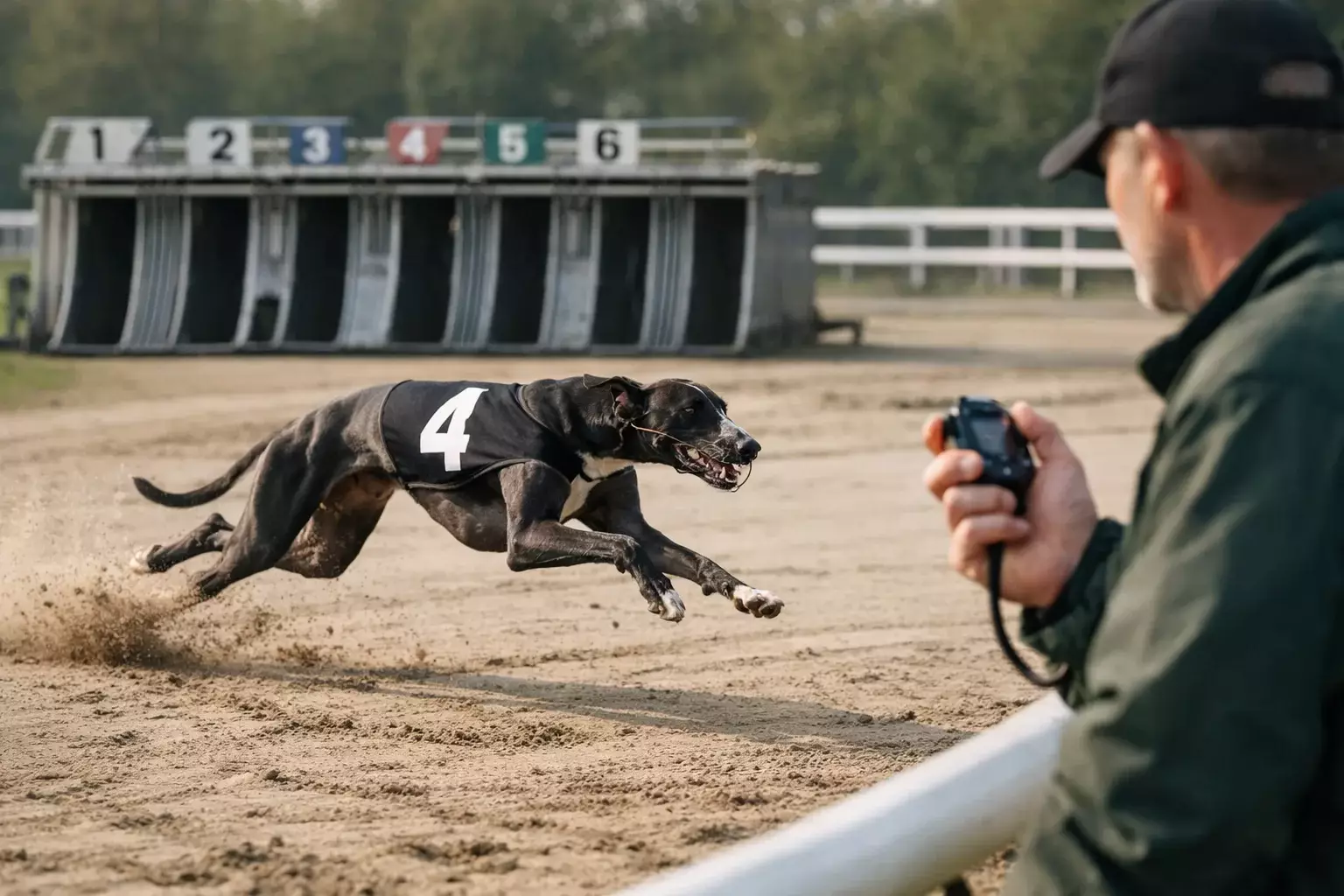
Trials tell tales that racecards cannot. Before a greyhound races competitively, it runs trials: solo or paired efforts that establish baseline times, reveal fitness levels, and indicate whether a dog is ready for competition. For punters willing to dig beyond basic form figures, trial results offer glimpses into preparation and potential that official race records may not yet reflect.
Every GBGB-licensed track conducts trials as part of its regular operations. Dogs returning from injury, switching tracks, or debuting in UK racing all trial before competing. With 5,133 new greyhounds registered with GBGB in 2024 alone, trials represent a constant activity across the licensed circuit. These sessions generate data that trainers use to assess their dogs and that attentive form students can use to refine their own assessments. Full details of racing and trial procedures are available through the GBGB racing portal. The numbers require interpretation rather than face-value acceptance, but they reward careful analysis.
Understanding trial types, how to read trial times, and where trials fall short as predictive tools helps separate useful information from noise. Trial data supplements race form rather than replacing it, adding another layer to the analysis that distinguishes serious students from casual observers.
Trial Types
Solo trials see a single greyhound run the track alone, chasing the hare without competitive pressure. These trials reveal raw speed capability in isolation, unaffected by the interference, crowding, and tactical considerations that shape race performances. A dog’s solo time represents something close to its theoretical maximum under the specific conditions of that day.
Paired or grouped trials pit two or more dogs against each other, introducing competitive dynamics without full race-sized fields. These trials test how dogs respond to company: whether they chase harder when challenged, maintain focus when another dog runs alongside, or show signs of distraction or difficulty in competition. The presence of another runner changes the nature of what the trial measures.
Grading Trials
Dogs entering a new track or returning after extended absence run grading trials to establish their competitive level. Track officials use these trials to place dogs in appropriate grades, matching them against runners of similar ability. Across the 18 licensed UK tracks remaining as of January 2025, each venue maintains its own grading standards, making trial assessments essential when dogs transfer between circuits. A dog trialing significantly faster than its previous race times might earn promotion; one trialing slower might face demotion. These grading decisions affect which races a dog can enter and at what level.
Grading trials carry particular significance for dogs moving between tracks. A greyhound with strong form at one venue must prove it can perform at another before competing there. Track configurations differ; a dog excelling at a larger track might struggle with the tighter bends of a smaller circuit, or vice versa. Grading trials reveal these suitability questions before money rides on the answers.
Fitness Trials
Dogs returning from injury or layoff run fitness trials to demonstrate readiness for competition. These trials show whether recovery is complete, whether the dog still possesses its previous ability, and whether any lingering issues affect performance. Trainers monitor these trials closely, and sensible punters note which dogs are trialing rather than racing when assessing upcoming race entries.
The gap between injury and return varies by severity. Minor muscle strains might require a week’s rest and one trial. Serious injuries might involve months of rehabilitation and multiple trials before competitive racing resumes. Trial frequency and progression reveal how recovery is proceeding, with improving times suggesting returning fitness.
Interpreting Times
Trial times require context that raw numbers do not provide. Track conditions, weather, going, and even the time of day affect times in ways that make direct comparisons misleading. A trial time recorded on a cold morning with heavy going tells a different story than the same time recorded on a warm afternoon with fast conditions. Experienced form readers adjust their interpretations accordingly.
Comparison to recent race times at the same track provides the most reliable reference point. If a dog’s trial time falls within a second or two of recent winning times at that distance, fitness appears adequate. Times significantly slower than typical race times raise questions; times significantly faster suggest the dog may be primed for competition or benefiting from unusually favourable conditions.
Solo vs Race Comparisons
Solo trial times typically run faster than race times for the same dog. Without interference, crowding, or the need to navigate around other runners, dogs cover ground more efficiently. A dog recording a solo trial time matching its best race times is actually running below its competitive capability. The relevant question is whether the solo time suggests the dog can produce adequate race times, not whether it matches race times directly.
Calculating expected race performance from trial times involves rough adjustments. Some analysts add a second to solo times as a baseline race adjustment, then consider how the individual dog typically runs in competition. Dogs that race well in traffic might show smaller drops from trial to race; dogs that struggle with crowding might show larger gaps.
Sectional Splits
Where available, trial sectional times reveal more than overall times alone. Early pace indicators show trapping ability. Middle and late sectionals reveal whether speed is sustained or fades. A trial showing fast early sections and slow closing sections suggests a dog suited to sprint distances or one not yet at full fitness. Even sectionals suggest stamina and conditioning appropriate for longer trips.
Not all tracks publish sectional data from trials. Where this information exists, it deserves attention. Where it does not, overall times must suffice, interpreted with appropriate caution about what they can and cannot reveal.
Trial Limitations
Trials cannot replicate racing conditions. The absence of a full field eliminates crowding at bends, fighting for position, and the psychological pressure of genuine competition. Some dogs trial brilliantly but struggle to reproduce that form in races. Others trial moderately but raise their game when it matters. Trial performance and race performance measure related but distinct things.
Trapping behaviour differs between trials and races. A dog breaking from the boxes alone faces no competition for early position. The same dog in a race might trap slowly when distracted by rivals or trap faster when stimulated by the competitive environment. Trial trap times predict race trap behaviour imperfectly at best.
Fitness vs Form
Strong trial times confirm fitness without confirming form. A dog might trial well while lacking the competitive instincts, tactical awareness, or mental focus that racing demands. Conversely, a dog returning modest trial times might simply need the stimulus of competition to perform. Trials measure physical capability more reliably than competitive readiness.
Dogs returning from extended breaks pose particular interpretation challenges. Their trials might indicate full fitness restoration, but months without racing can affect racing instincts in ways trials do not reveal. First runs back from layoffs carry inherent uncertainty regardless of how encouraging trial data appears.
Information Asymmetry
Trainers see trial performance firsthand; punters see only the reported times. Trainers observe how their dogs move, whether they show enthusiasm, whether subtle issues affect performance. Numbers on a page capture none of this. The information gap between those present at trials and those reading results later limits how much confidence trial analysis can support.
Market movements sometimes reflect trial information reaching connected parties before wider publication. A dog whose trial impressed might shorten in the betting without any visible reason. Unexplained market confidence sometimes traces to trial performances that suggested more than the published times revealed. These dynamics remind us that public trial data represents incomplete information, useful but not definitive.
Important Notice
This article provides educational information about interpreting greyhound trial results. Trial data supplements race form analysis but cannot guarantee outcomes. All betting involves financial risk, and past trial or race performance does not predict future results. Conduct your own research before making betting decisions, and never wager more than you can afford to lose. Responsible gambling tools are available through licensed operators. If gambling becomes problematic, contact GambleAware or the National Gambling Helpline. You must be 18 or over to bet in the UK.
Greyhound Trial Results — More on this topic at results romford dogs.
See also Romford 750m Races.
